RUPP PAG V4.0
Introduction
The Royal University of Phnom Penh (RUPP) has long been committed to upholding and continuously enhancing the quality of its academic programmes, research activities, and institutional services. As Cambodia's premier public university and a leading institution in the national higher education landscape, RUPP recognizes that a robust and well-functioning quality assurance system is not merely a regulatory obligation but a fundamental expression of its responsibility to students, employers, the government, and society at large. The establishment and progressive development of a dedicated quality assurance function at RUPP reflects this enduring commitment — one that has grown in scope, capacity, and institutional significance in step with Cambodia's integration into regional and international higher education communities. Today, all academic assessments at RUPP are thoroughly processed through the QAC before submission to any external body, ensuring that every program evaluation and self-assessment report presented on behalf of the University is rigorously verified for its validity, reliability, and credibility.
Background

After Cambodia became ASEAN member on April 30, 1999, The Minster of Education, Youth and Sport was invited to attend the 6th AUN-BOT Meeting in Brunei Darussalam in June 1999. Since then the Royal University of Phnom Penh has been listed as a member of the ASEAN University Network (AUN). Subsequently, the RUPP Quality Assurance Unit (RUPP-QAU) was opened at the recommendation of the Ministry of Education, Youth and Sport, with the endorsement of the RUPP Executive Board in 2002 (Ref: Letter of Nomination 1074/02RUPP). RUPP QAU manages a systematic, structured, and continuous program to ensure a high standard of teaching and research by the university academic departments and staff. It also works to ensure the gradual improvement of all quality standards within the University. In addition to coordinating all internal university quality assurance, the QAU also coordinates efforts at the RUPP to prepare for external accreditation. To accomplish its mission, QAU has established the Internal Quality Assurance Network (Ref: Letter of Invitation 965/2009RUPP) among the departments in order to ensure high standards of quality management in RUPP. A good functioning system of Internal Quality Assurance (IQA) is necessary to harmonize departmental efforts in implementing the standards set by the Accreditation Committee of Cambodia (ACC) and in preparing documents for submission to both internal and external accreditation agencies (AUN-QA).
Since its establishment, the Quality Assurance Unit has implemented practical and effective methods to measure and improve academic quality at RUPP. At the end of every academic year, QAU routinely carries out surveys about course content and delivery, providing feedback which helps target needs for change within the University. The SWOT analysis reports are disseminated to the University rector, vice-rectors and all department stakeholders within the institution.
Quality Assurance Office at Royall University of Phnom Penh has been supported with Capacity Building under SICA project. RUPP is the coordinator of the project “Strengthening quality assurance in Cambodian higher education” – SICA. Read about SICA Project News. at RUPP, or read more about SICA Project
Vision
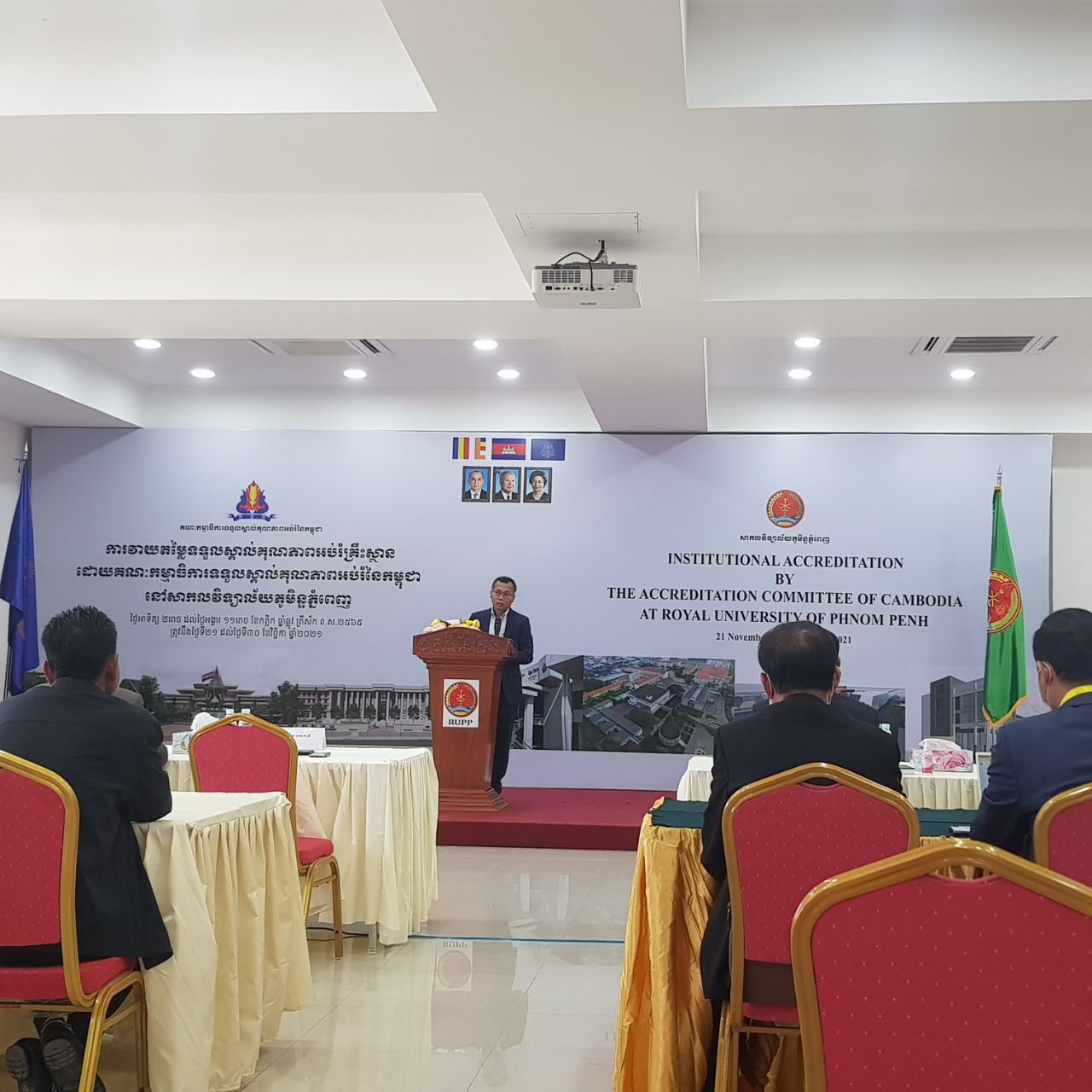
To foster a culture of continuous quality improvement and excellence in education, research, and community engagement, to ensure that RUPP remains a leader in higher education and meet the evolving needs of students and society.
Mission
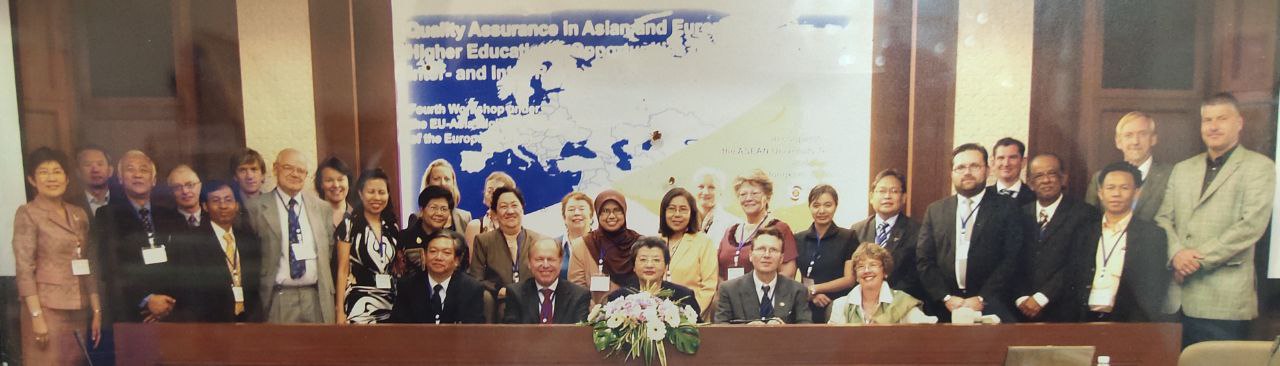
The QAC works collaboratively with all faculties, departments, offices, and units of RUPP to:
- promote good practices in quality management with the RUPP stakeholders;
- act as RUPP’s internal academic monitoring, assessing, and managerial quality consultant;
- enhance the quality of educational programs and internal management of the University; and
- prepare RUPP for internal and external accreditations.
Goals

RUPP-QAC has the following 5-goal.
- Goal 1: Enhance Academic Quality and Integrity: To improve and enforce the QA monitoring and evaluation system across the university affiliations regarding continuous quality improvement (CQI).
- Goal 2: Foster a Culture of Continuous Quality Improvement: To manage a quality assurance system that exceeds the National Standards of Higher Education requirements.
- Goal 3: Strengthen Student and Stakeholder Engagement: To assist the RUPP stakeholders with self-evaluation on their initiatives for self-improvement and accreditation.
- Goal 4: Ensure Compliance with Accreditation Standards: To ensure the best practices of Quality Assurance with the stakeholders.
- Goal 5: Leverage Technology for Quality Assurance: To establish the digital platform for KPIs monitoring the quality of academic performance to meet national and regional standards and achieve academic excellence.
Student Grievance
Student Grievance flow

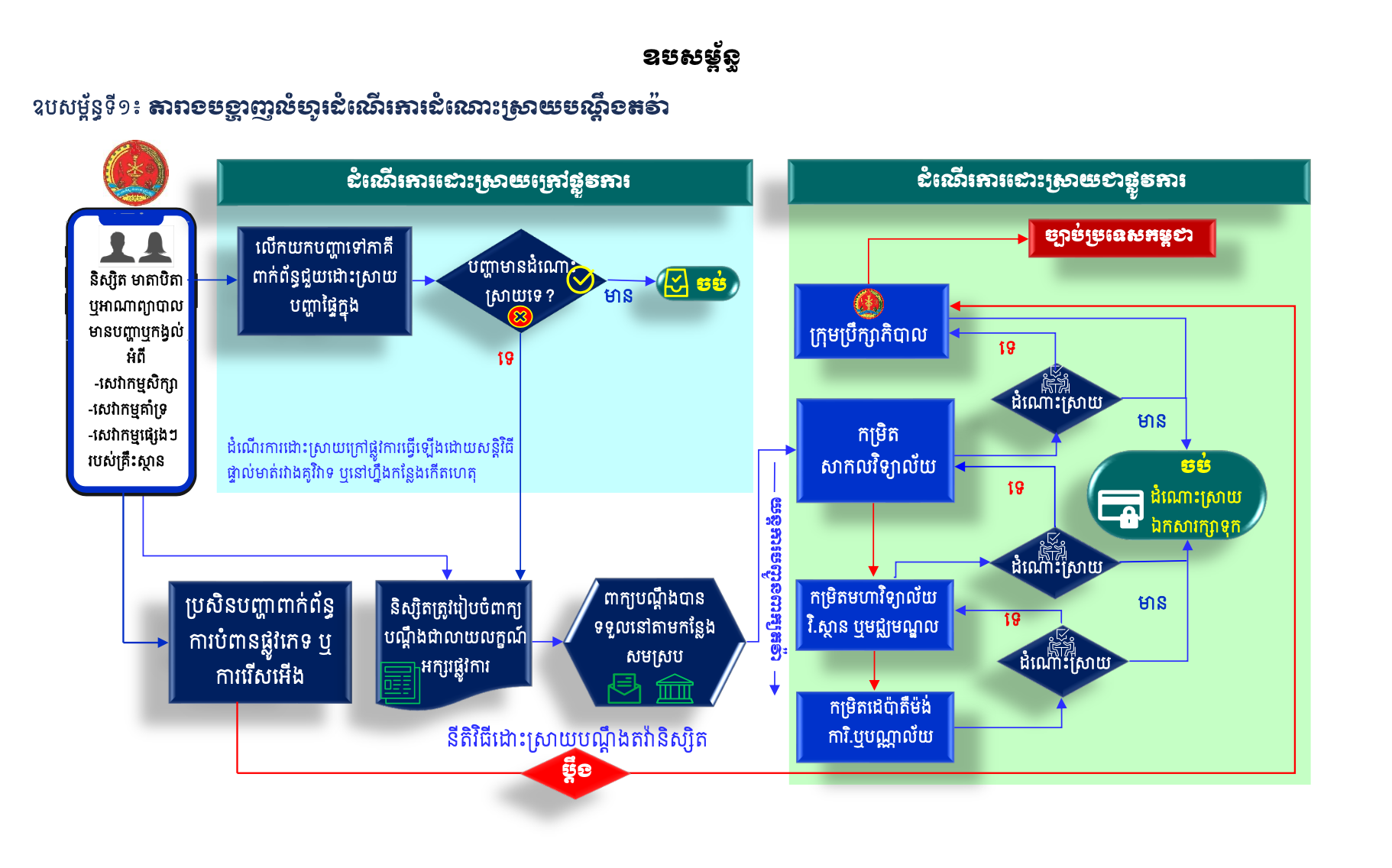
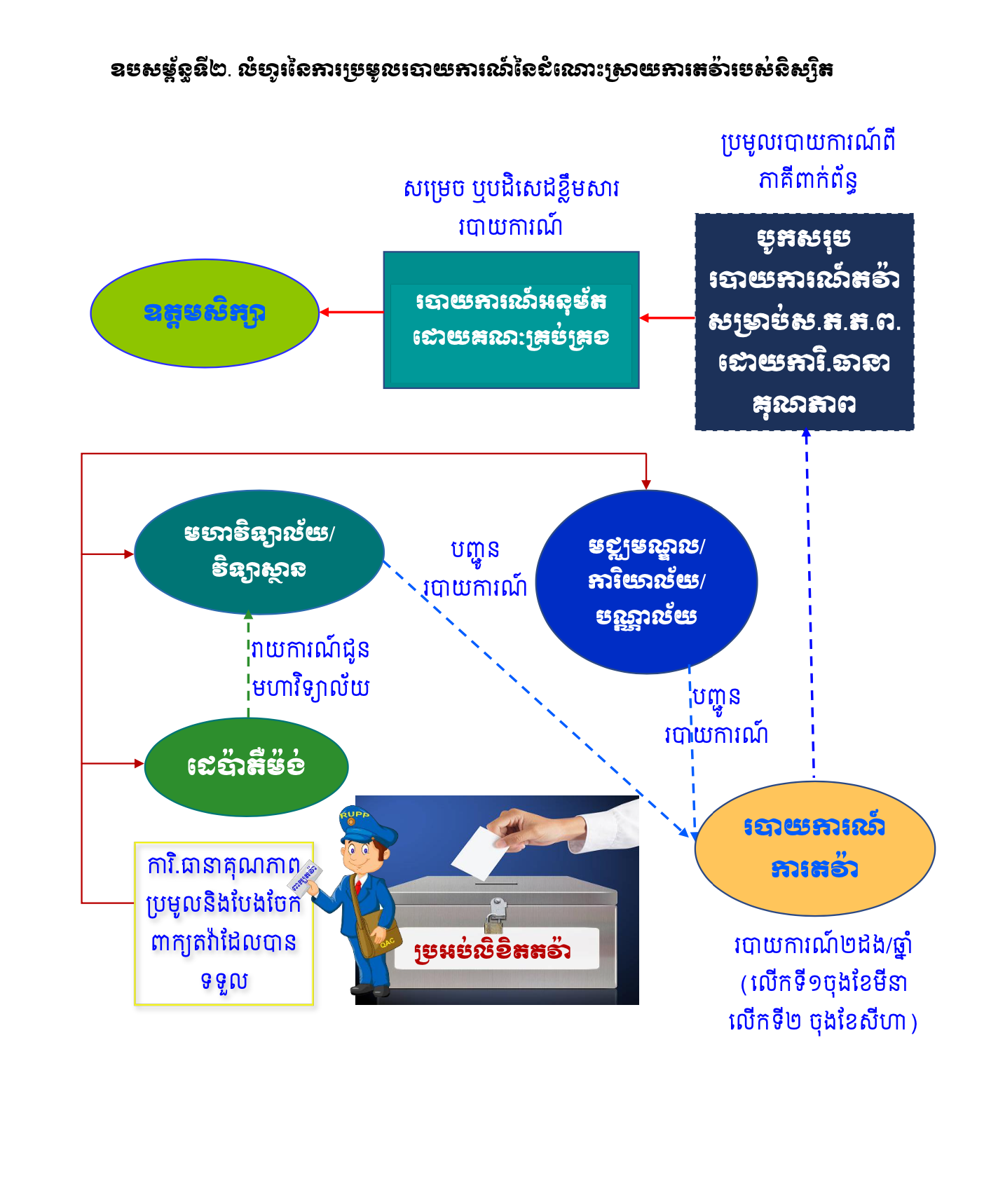
Student Grievance Policy: >>Download Policy
Student Grievance Form
Grievance form: >>Download form
About QAC
Institutional Framework
Core Value: PAGE
Professionalism, Accountability, Growth, Excellence.
Our Motto
QAC excellence, accountability, transparency, professionalism and sustainability, integrity, empowerment, and actions in fulfilling the motto of Creating a Culture of Quality.
Curriculum Template
Official curriculum design guidelines, syllabus forms, QA manuals, and specification formats.
14 Files

| Document Title | Format | Action |
|---|---|---|
| RUPP_Course Specifications_Template 07 March 2024_KH | Doc | Download |
| RUPP_MA Program Specification_Template 07 March 2024_KH | Doc | Download |
| RUPP_MA_Program Specification_Template 07 March 2024_E | Doc | Download |
| RUPP_OBE.Course Specifications_Template 07 March 2024_E | Doc | Download |
| BACourse Syllabus Template-English | Doc | Download |
| Program Specification Template-English | Doc | Download |
| Program Specification Template-Khmer | Doc | Download |
| Course Specifications Template-Khmer | Doc | Download |
| Course Specifications Template-English | Doc | Download |
| RUPP_PhD_Program Specification_Template 07 March 2024_E | Doc | Download |
| RUPP_PhD_Program Specification_Template 07 March 2024_KH | Doc | Download |
| RUPP_Program Specification_Template 07 March 2024_E | Doc | Download |
| RUPP_Program Specification_Template 07 March 2024_KH | Doc | Download |
| CNQF Framework | View |
QA Strategic Plan 2024–2030
Roadmaps
RUPP QAC Strategic Plan 2024-2030
Khmer Edition
RUPP QAC Strategic Plan 2024-2030
English Edition
Key Cycle Tasks
Late April Course Evaluations
Late November Tracer Studies
Strategic Targets
QA Strategic Milestones
In alignment with MoEYS Vision 2030 to supply high-quality manpower, safeguard national stability, and foster long-term economic growth.
Long-term Vision • 2021 – 2050
2021 Phase
1
65% PLOs Revised and Updated
Institutional learning outcomes alignment.
2023 Phase
2
3 BA Programs Assessed by AUN or Regional Agencies
External regional benchmarking and verification.
2025 Phase
3
100% PLOs + 25% Programs Assessed by External Professional Bodies
Full institutional curriculum standardization.
2030 MoEYS
2030
Digitization / Online Assessment (Right Skill Workforce)
Digital systems for high-skill market readiness.
2040 Global
Goal
International Recognition & World University Ranking (QS)
Global academic reputation & research benchmarks.
2050 High-Income
Target
High-Income Benchmark: 45% PhD Academic Staff at RUPP
Advanced academic capacity & doctoral expertise.
Capacity Building & Initiatives
Quality Assurance Activities & Workshops
Official timeline of QA center development, consultative workshops, and Erasmus+ SICA initiatives.

1
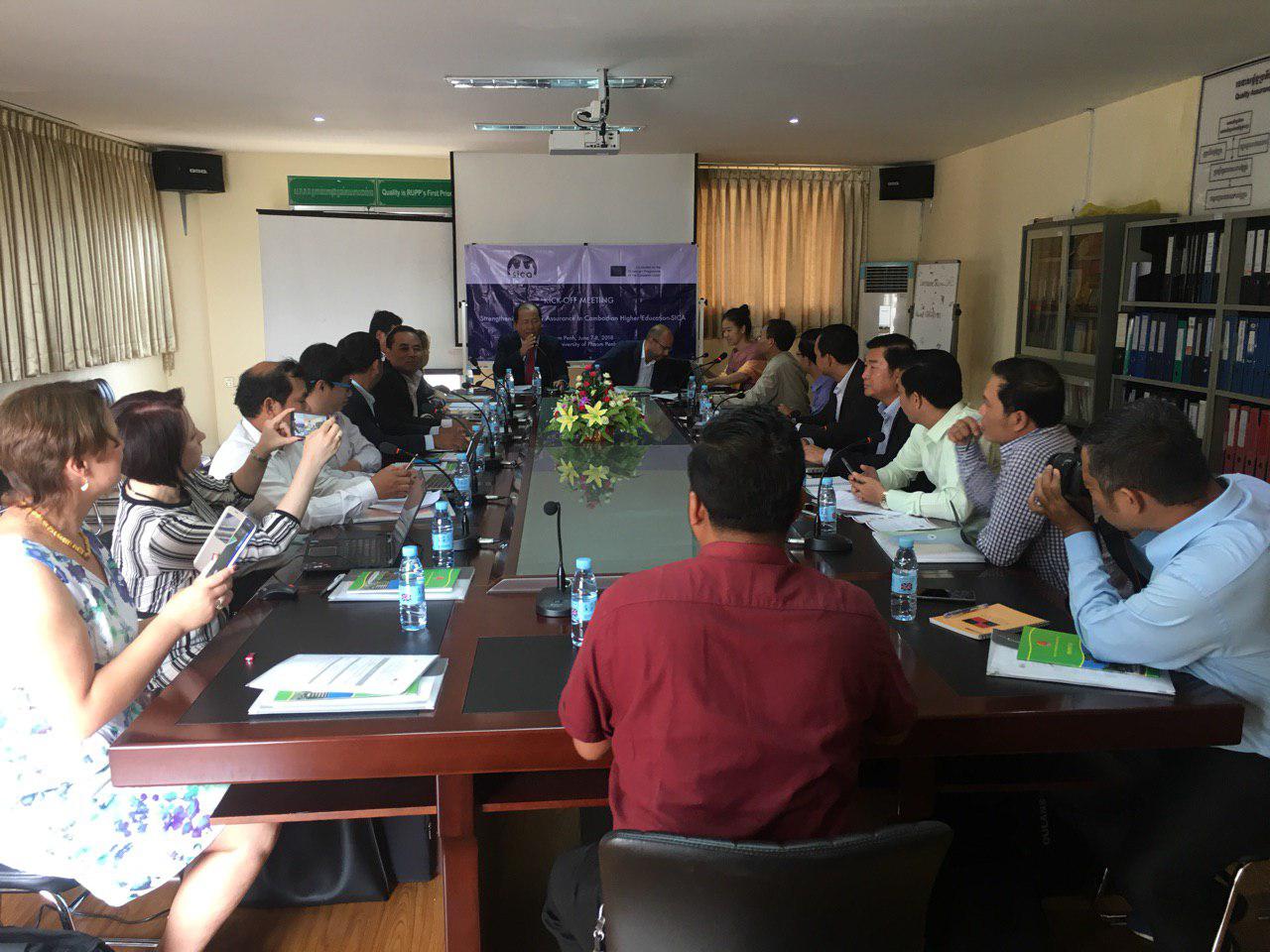
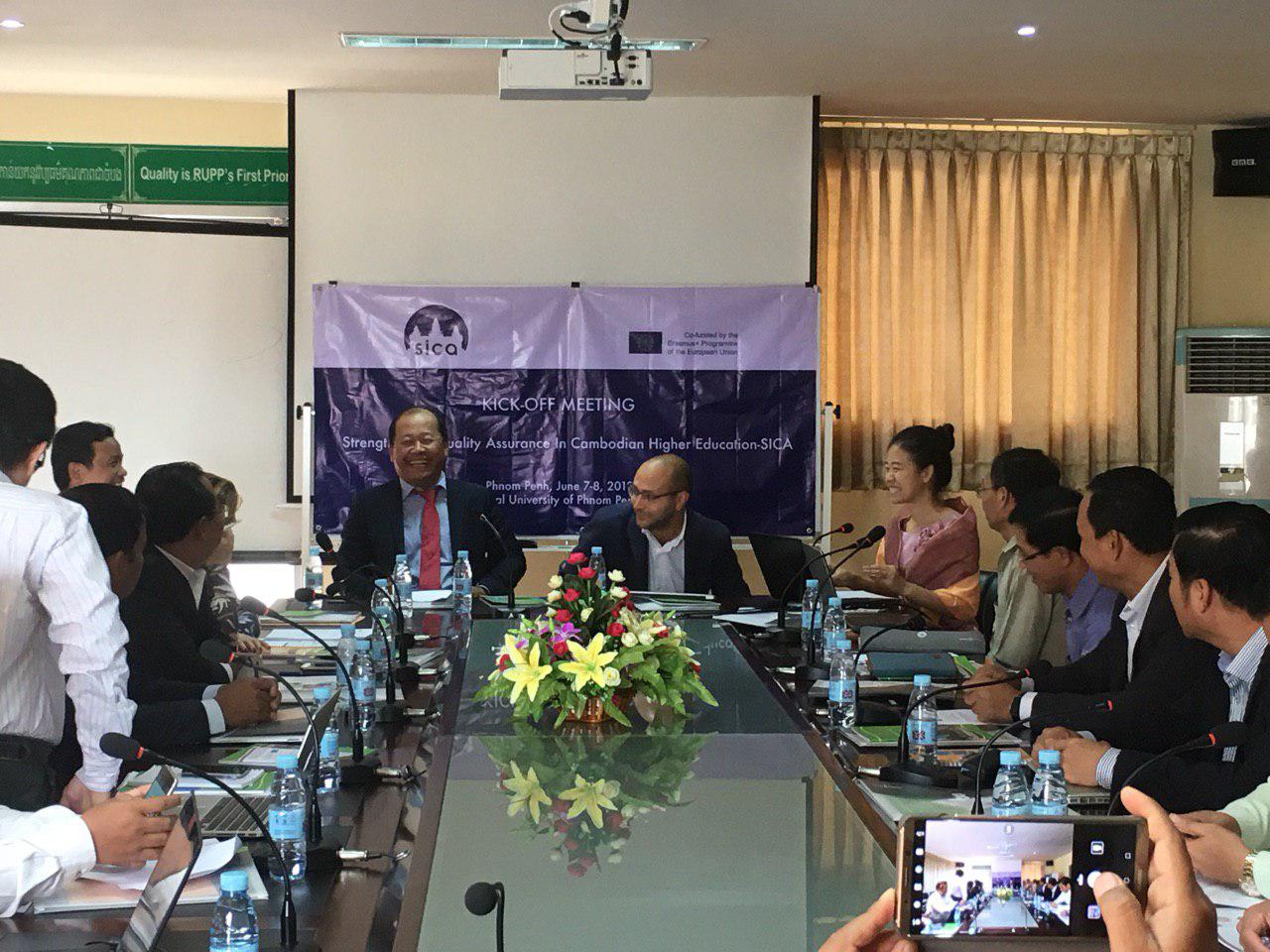
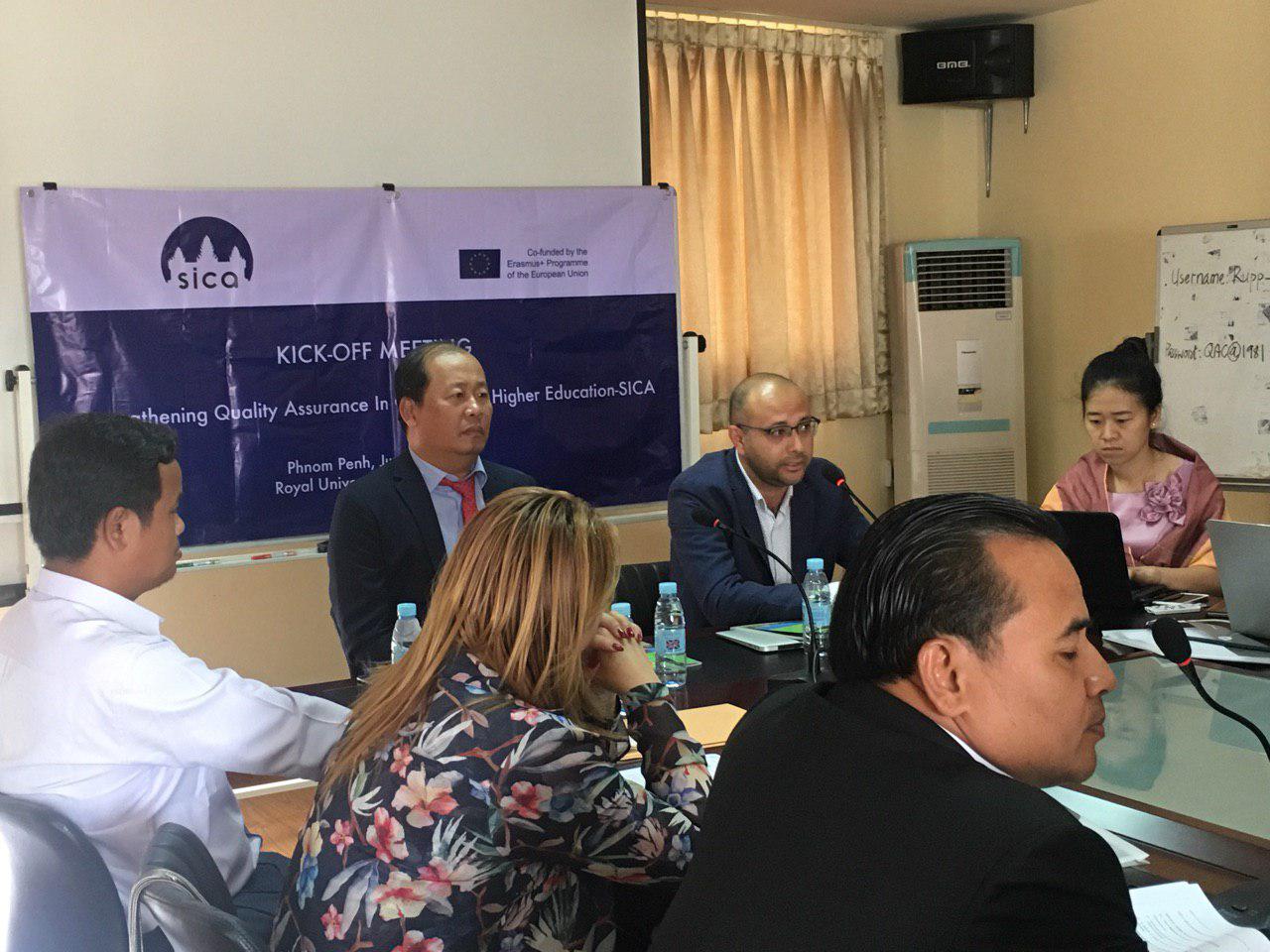
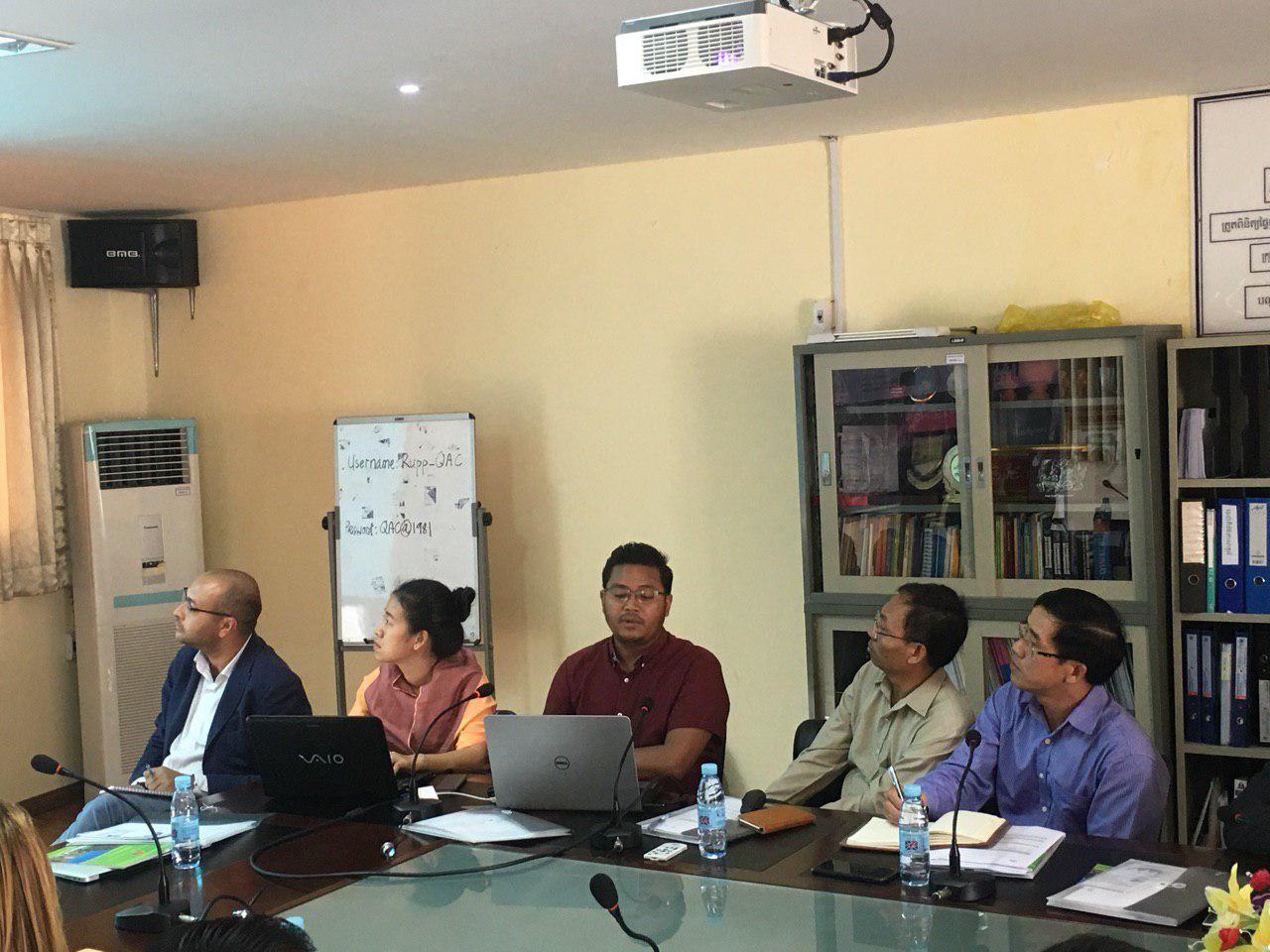
Kick-off Meeting: Strengthening Quality Assurance in Cambodian Higher Education (SICA)
RUPP • 07–08 June 2018
Day 1
- • RUPP Vice-Rector delivered his welcoming address on the introduction of project in which he highlighted the purposes and importance of doing the SICA project.
- • Mr Kean Tak gave his presentation on the overview of SICA Project.
- • Each partner (Royal University of Phnom Penh, Svay Rieng University, Chea Sim University of Kamchaymear, Mean Chey University, University of Battambang; University of Heng Samrin Thbong khmum; Mykolas Romeris University; The Lucian Blaga University of Sibiu) university presented on their introduction and experience in Quality Assurance Management at their institutions.
- • Mr Nizar, Agora Institute, explained the details of SICA Work-packages.
Day 2
- • The Lucian Blaga University of Sibiu presented national quality assurance system in Lithuania Higher education.
- • Mykolas Romeris University presented their national quality assurance system in Romania.
- • Mr. Nizar presented the administrative and financial management of SICA project.
- • RUPP and all universities decided on their management structure of the project.
Event Gallery
2
Setting up Quality Assurance Center
RUPP • 10 July 2018
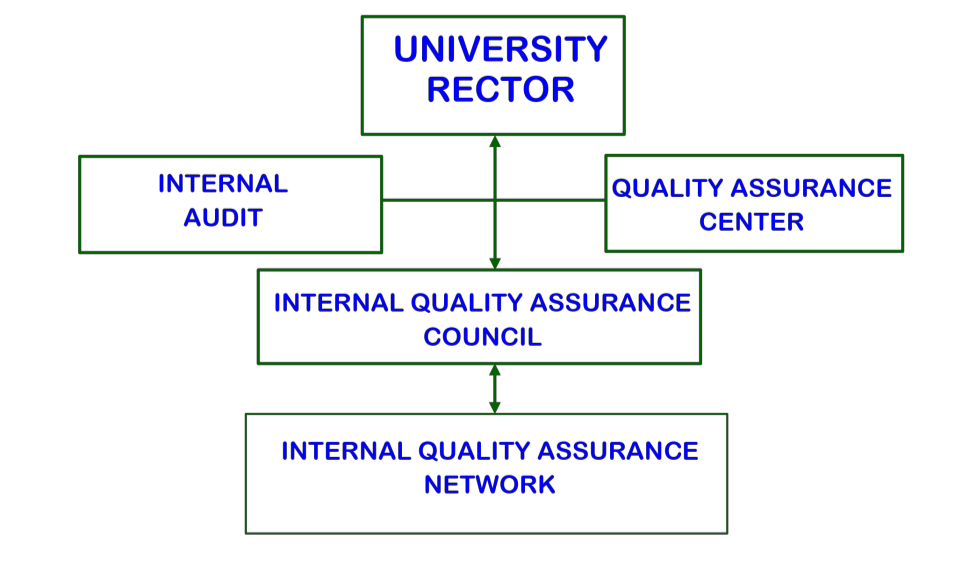
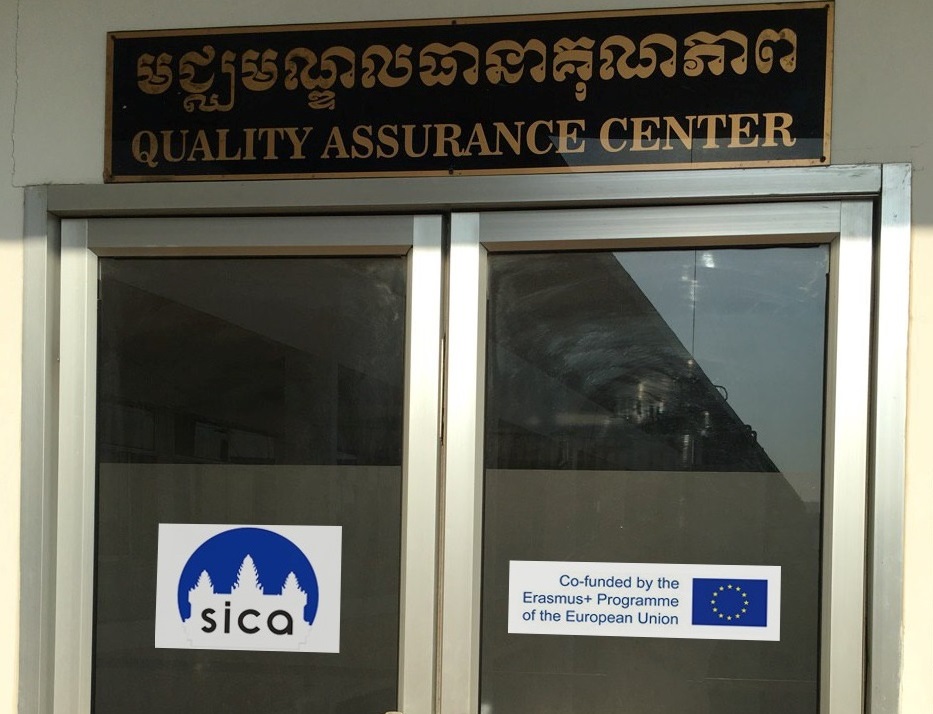
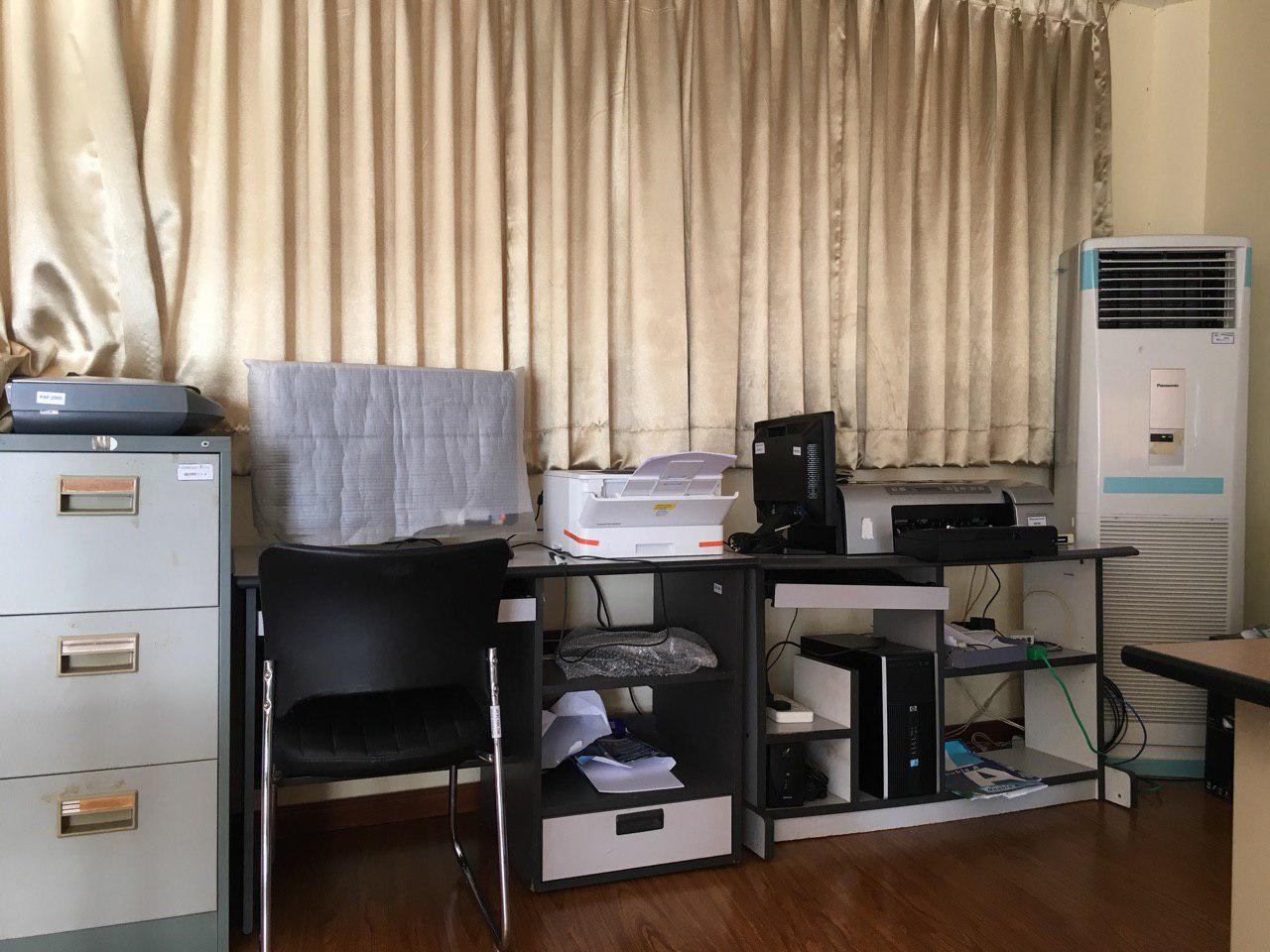
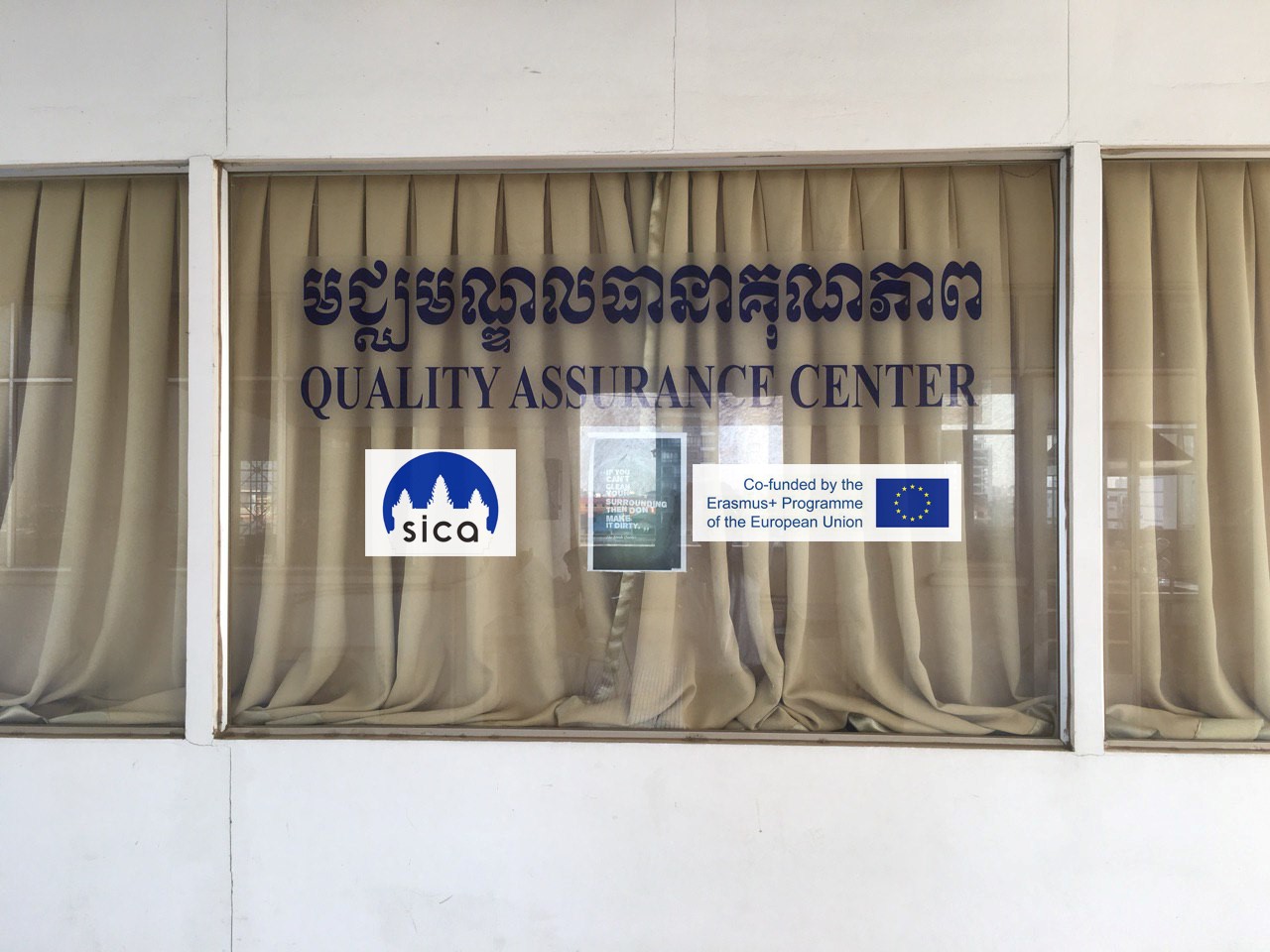
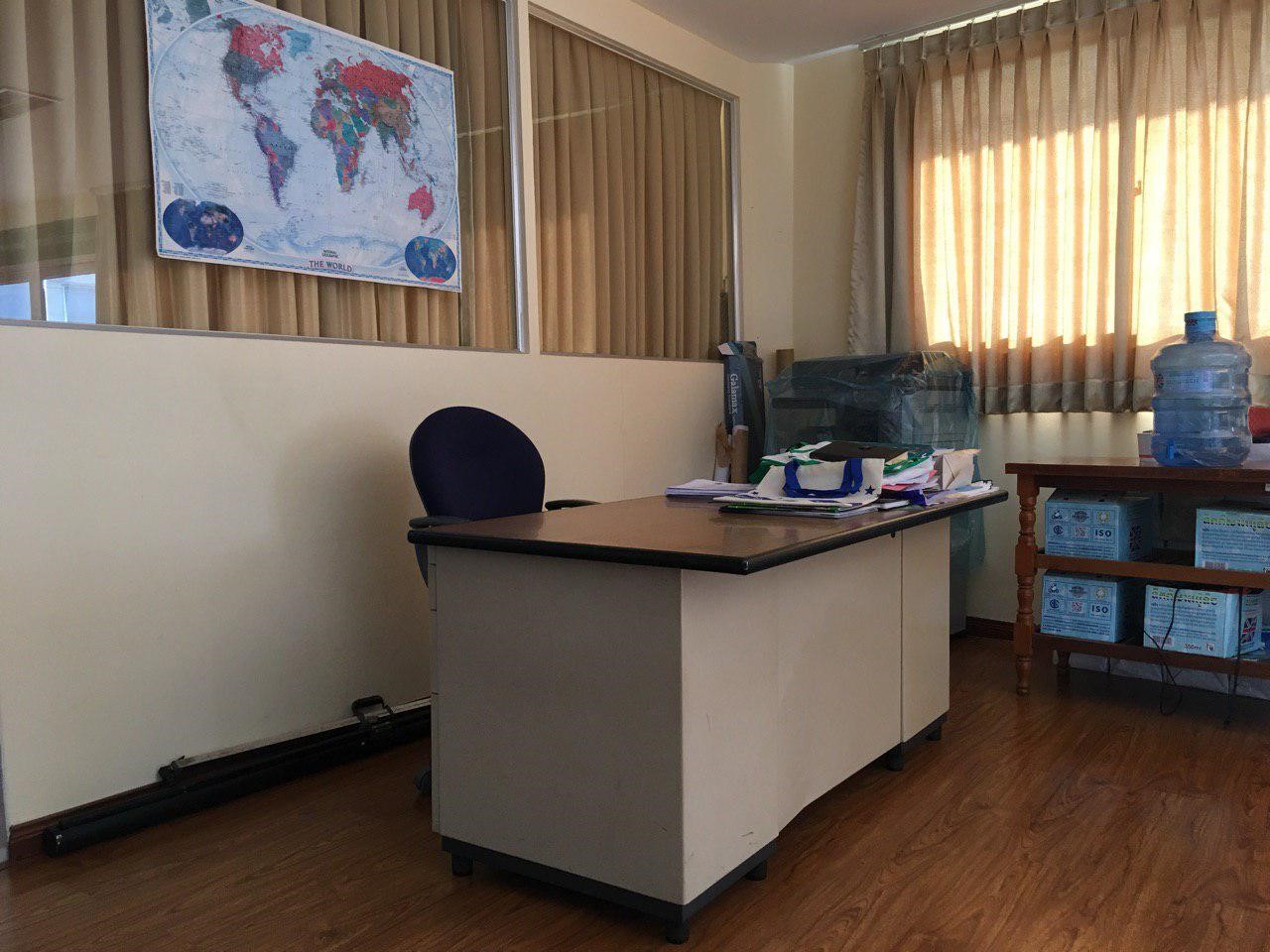
After the kick-off meeting, Quality Assurance Center of Royal University of Phnom Penh has been established on 10 July 2018, co-funded by Erasmus+ Programme via SICA “Strengthening Quality Assurance in Cambodian Higher Education” Project.
1-Structure

2-Office Facilities
3
Program Quality Management Consultative Workshop
RUPP • 11–15 February 2019
Participants: QA Technicians, Deans, Vice-Deans,
Heads, and Deputy Heads of Departments.
Workshop Agenda
- 1. Introduction to Project SICA
- 2. Reviews of PLOs
- 3. Process of Writing Programs’ SARs
- 4. Understand RUPP Program Assessment Tools (11 Criteria)
- 5. Forming Program SAR Writing Team
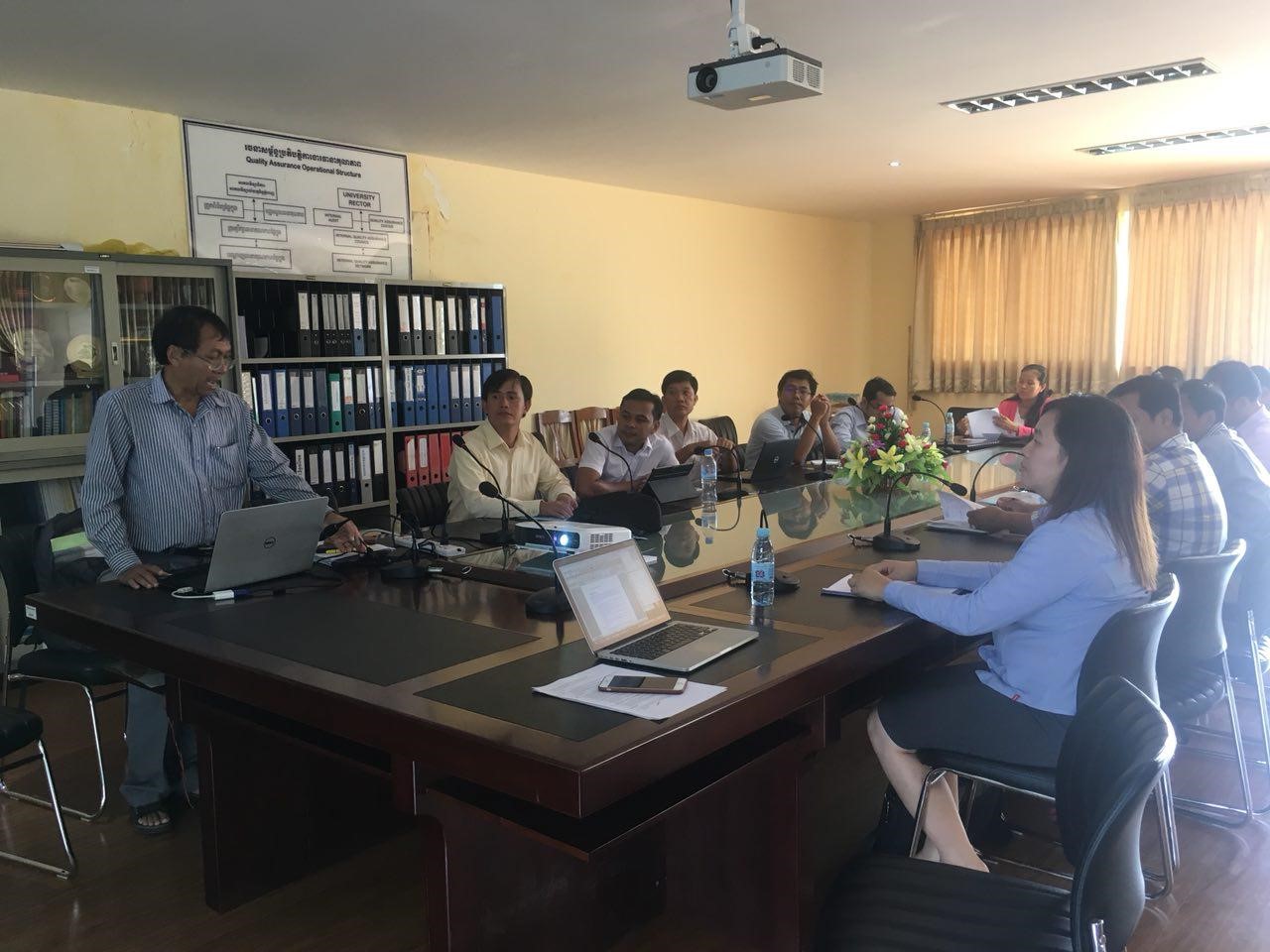
After the Benchmarking meeting from our partners in Europe; the Uppsala University and the Mykolas Romeris University, we present the experiences from our partners and also RUPP’s procedure. As also as required by Ministry of Education Youth and Sports to review and improve the quality of the programs in order to match with the requirements of the job markets, this workshop was done to maintain and improve quality of the programs at RUPP. All departments are required to review their PLOs so that their PLOs are aligned with Cambodia National Qualification Framework (CNQF) and current market needs.
Moreover, to prepare RUPP for the institutional accreditation, each program at RUPP needs to write program self-assessment report (SAR). Writing programs’ SARs requires a Program Assessment Tools. Luckily, RUPP has its own tools in which we adapted and based on the Guidelines for Program Assessment by AUN-QA since we have been one of AUN members since 2002. Accordingly, training our department representatives to understand the tools is rather important since through understanding the tools and writing programs’ SARs are kind of effective way that the departments can enhance the quality of their programs.
The discussion continued to seek the solutions to the problems that it is not easy to write the programs’ SARs. As such, we have come up the solution that forming a SAR writing team which should engage all important stakeholders such as heads and deputy heads of departments, lecturers, and IQA representatives is the only way to ease the writing process.
To sum up, this QA sharing workshop has resulted that forming the technical teams to deal with RUPP’s QA practice that are reviewing program learning outcomes and writing programs’ SARs. Hopefully, we will be able to figure out more solutions to cope with our recent difficulties.
Event Gallery
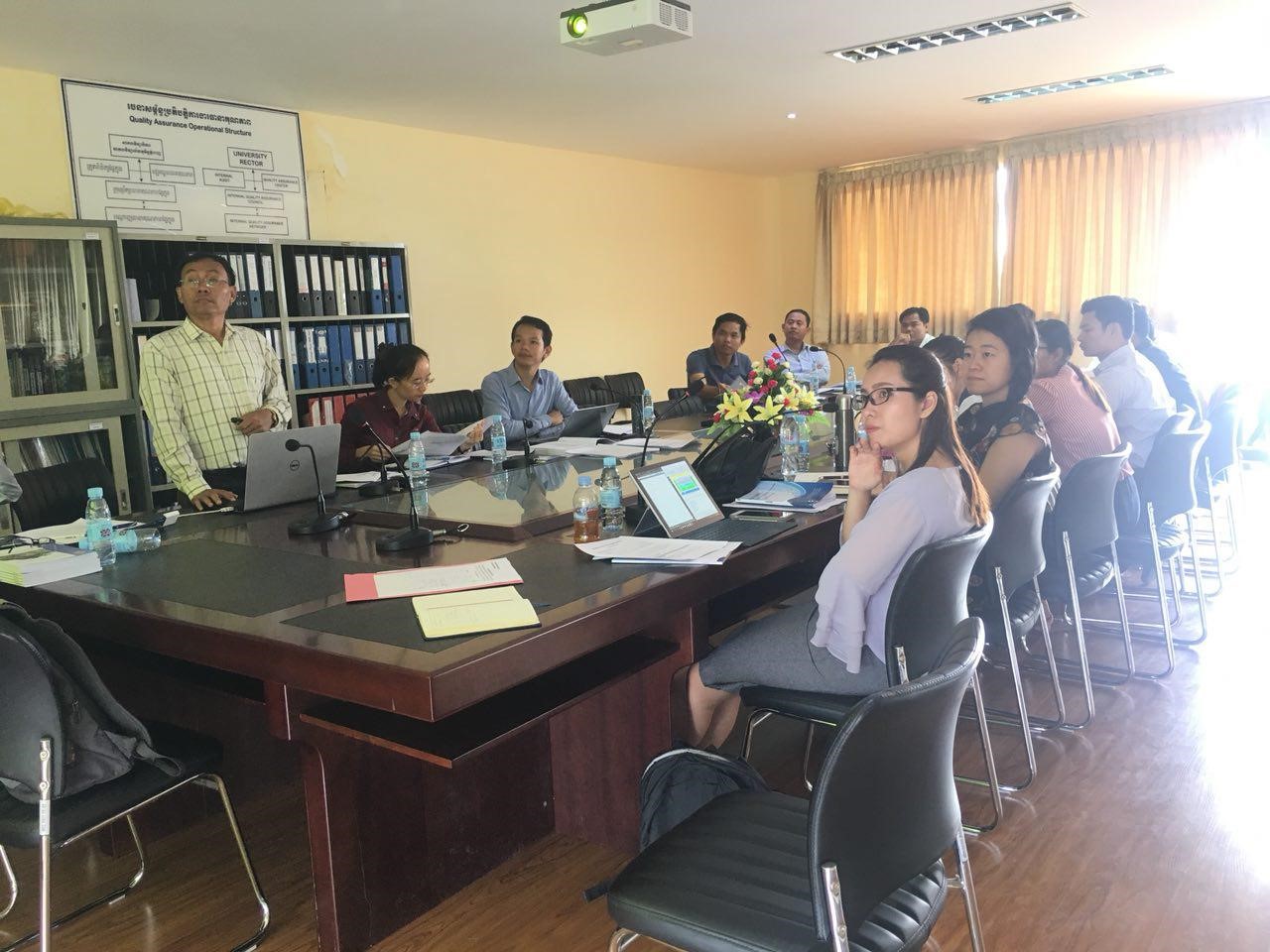
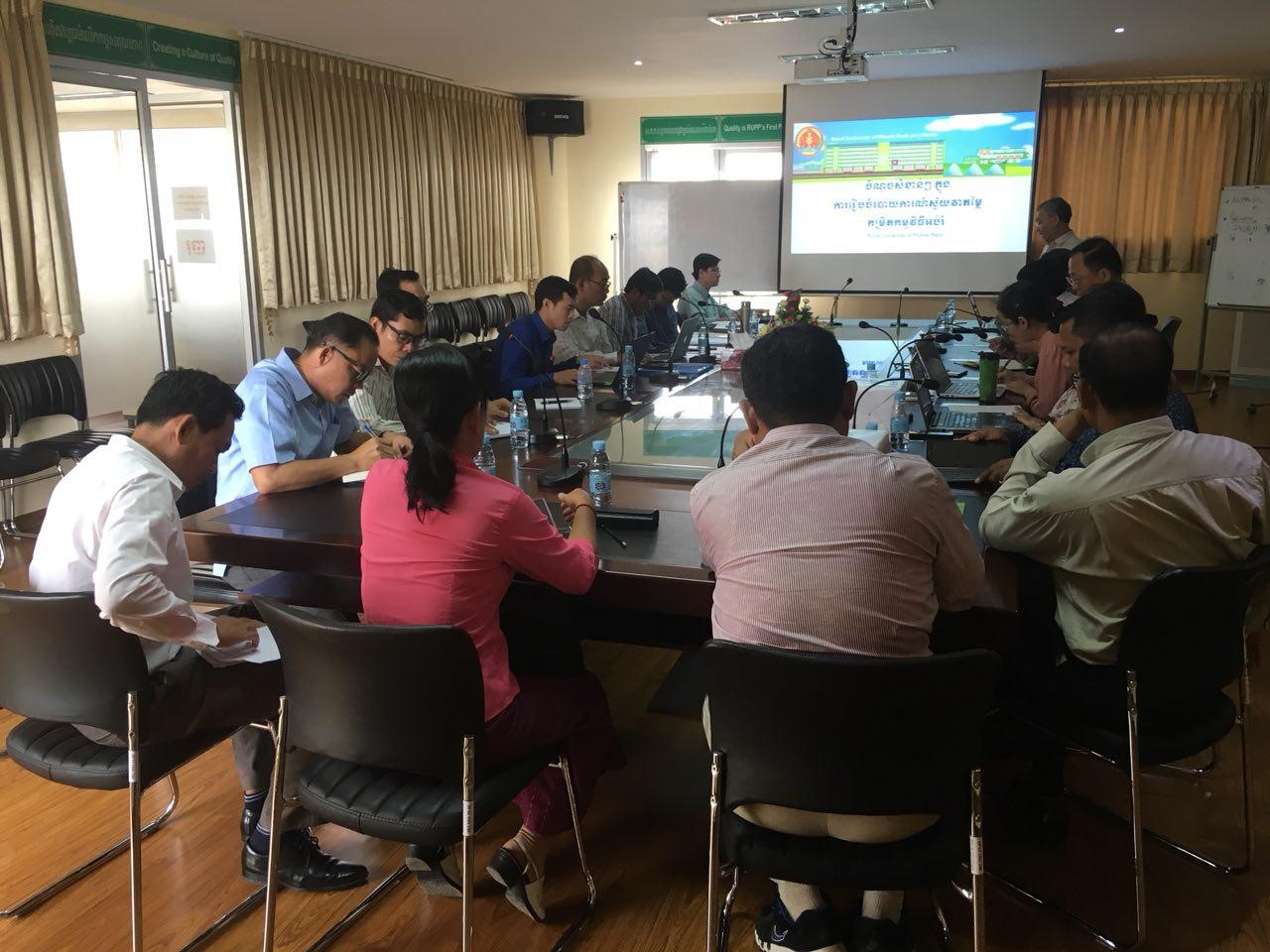
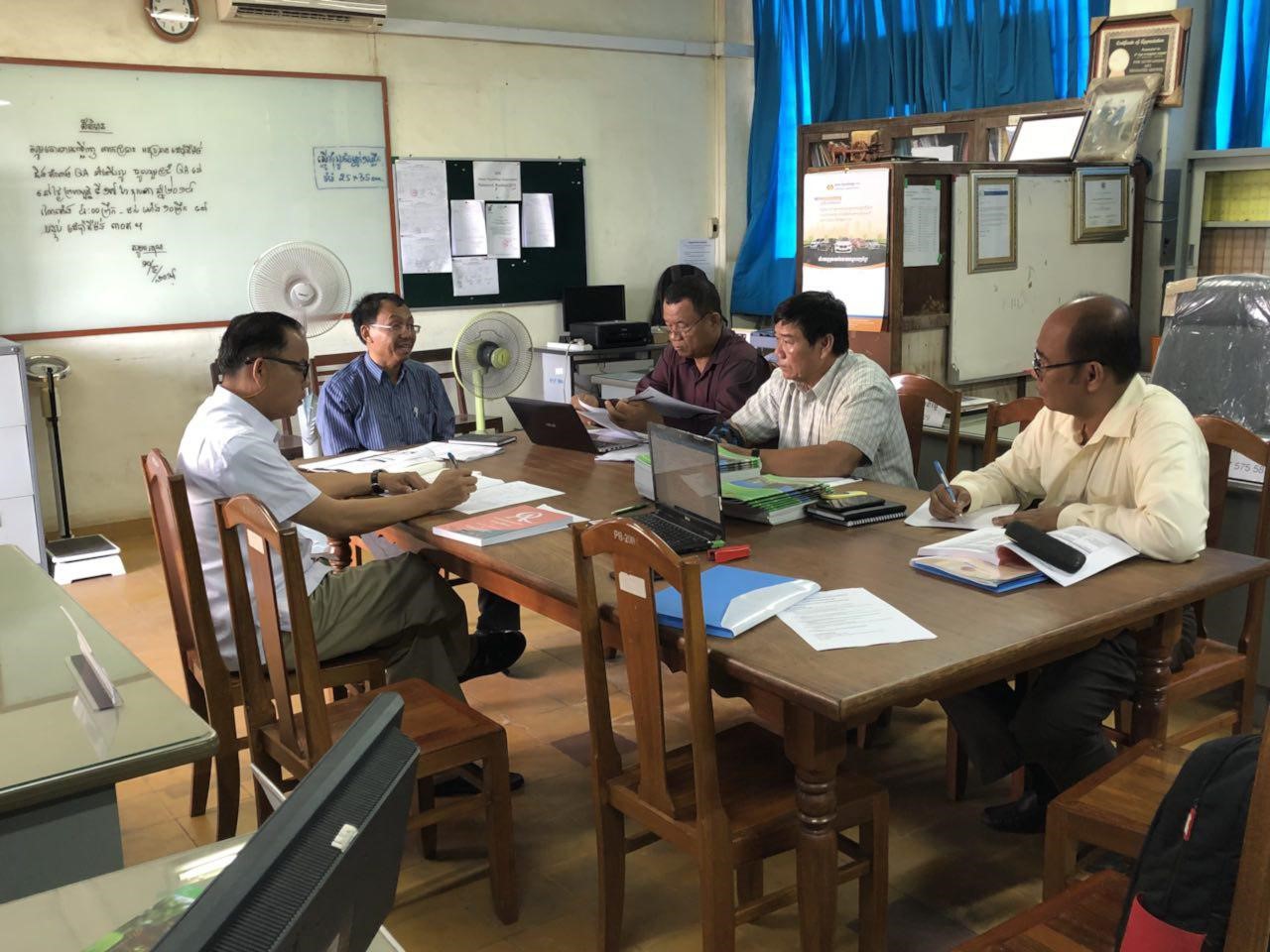
4
RUPP Preparation for Self-Assessment
Diamond Hotel Kampot • 28–29 June 2019
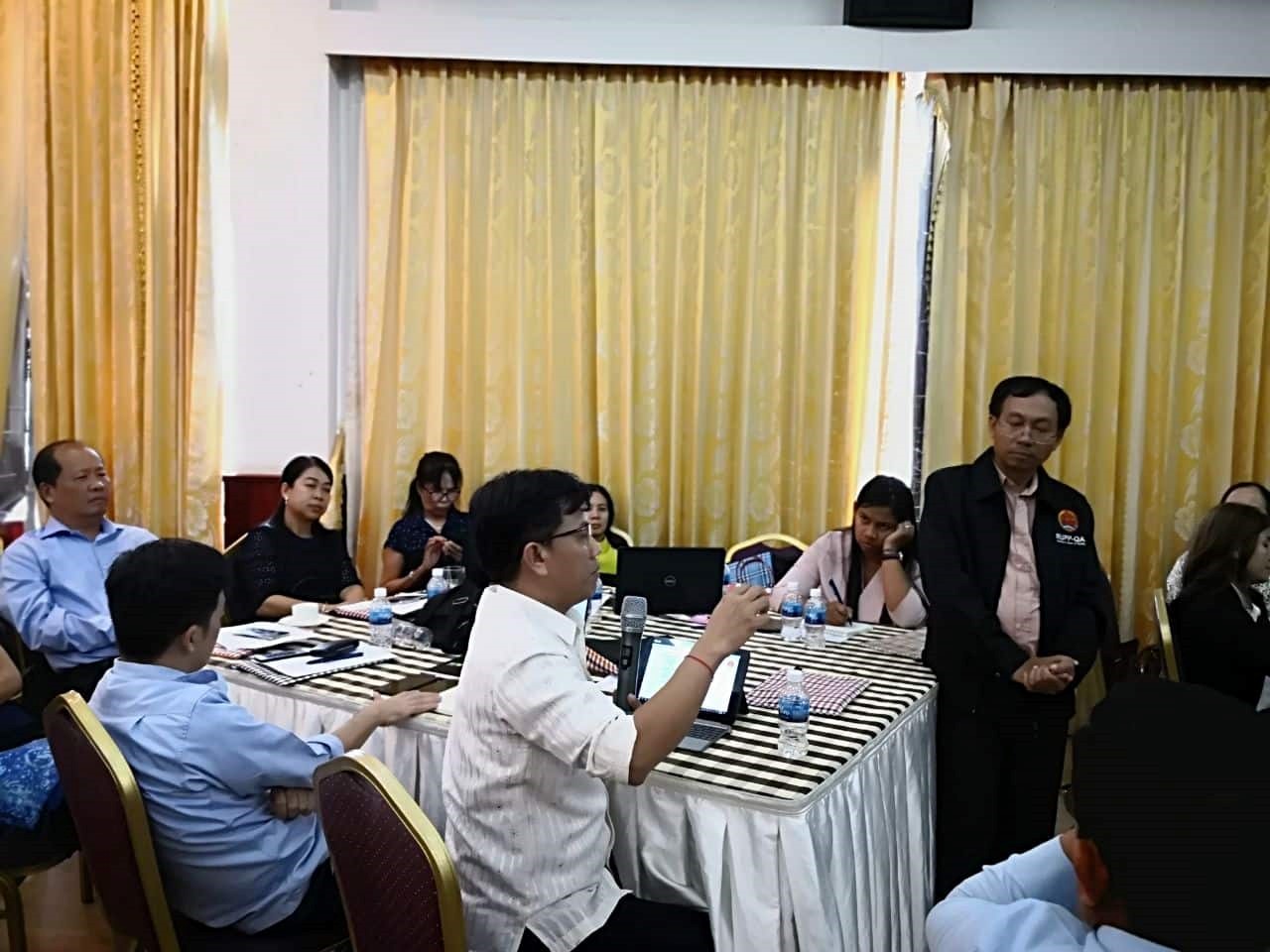
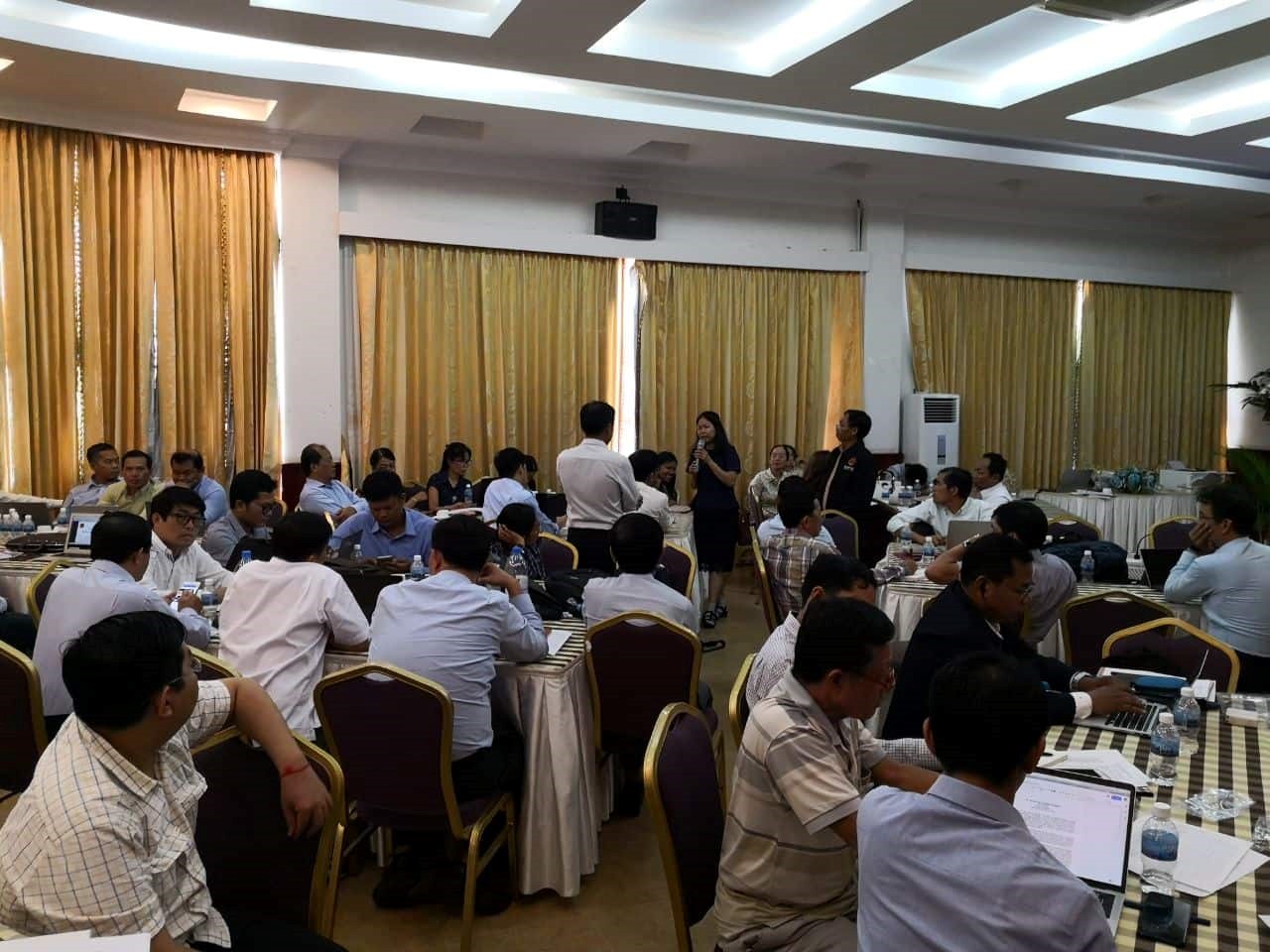
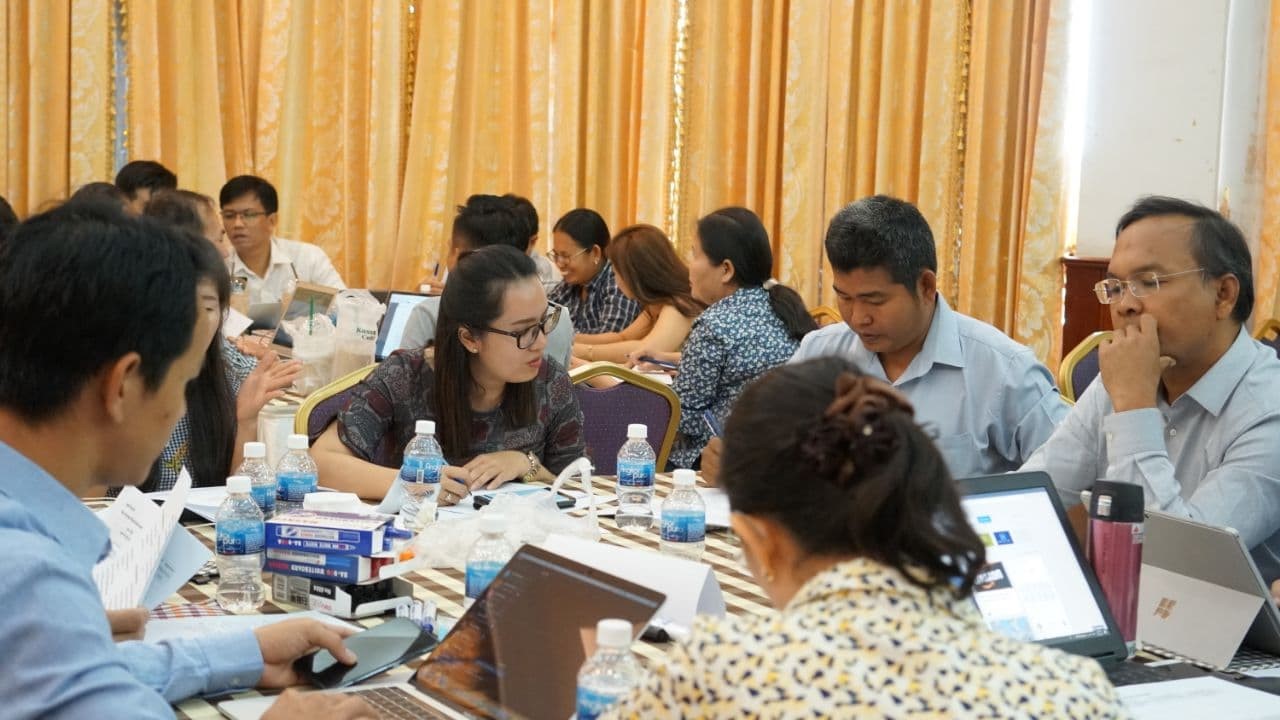
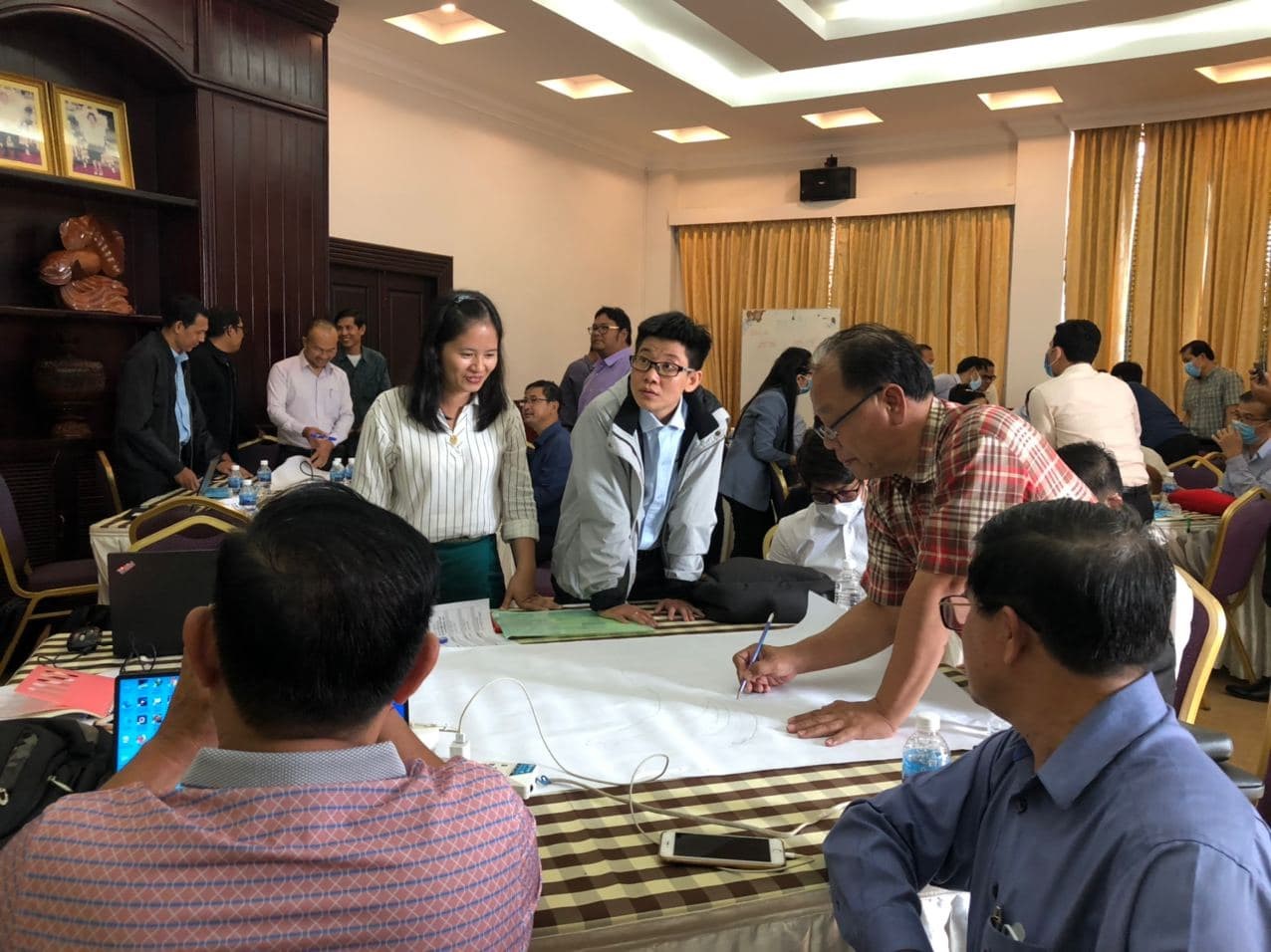
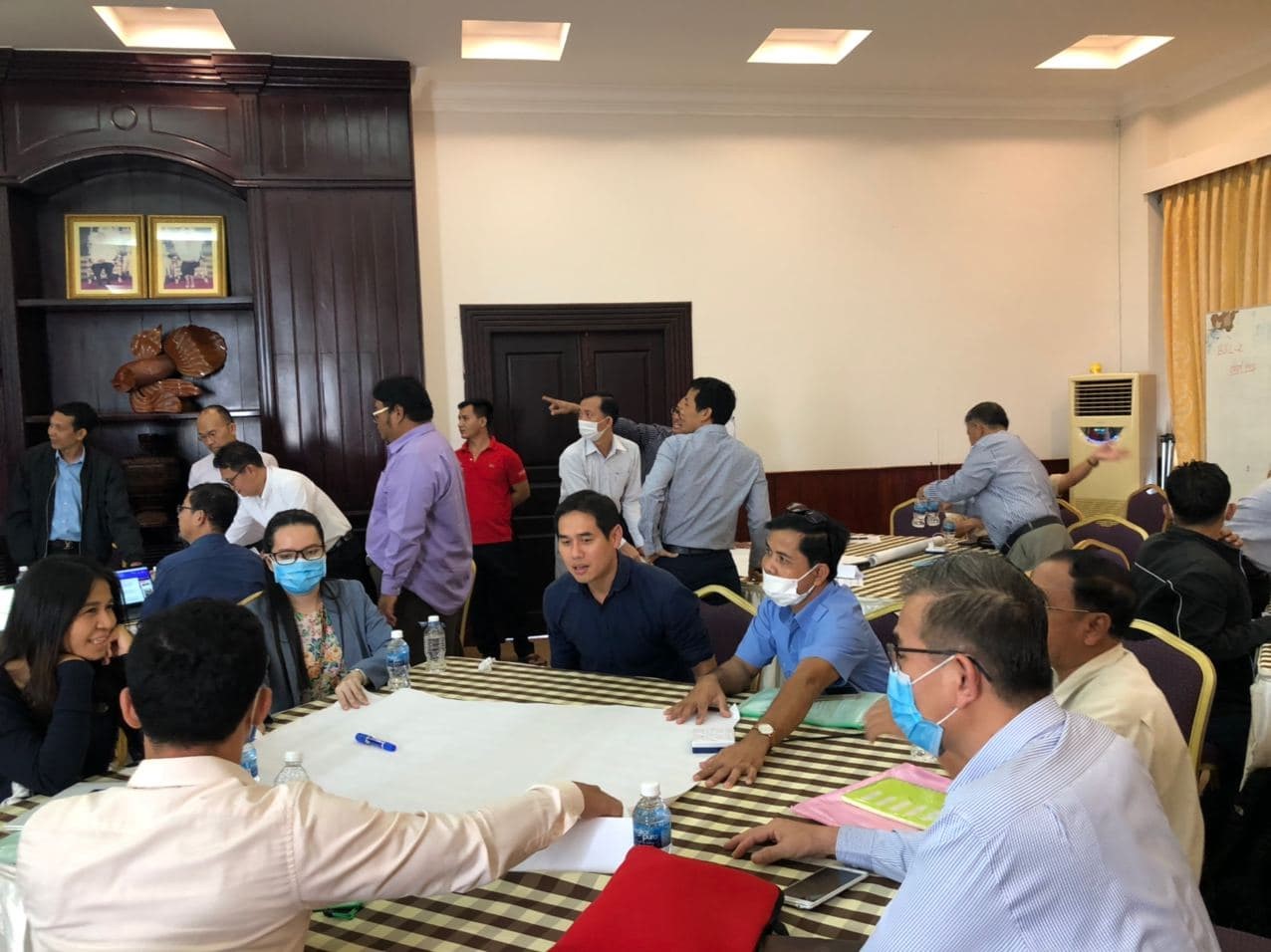
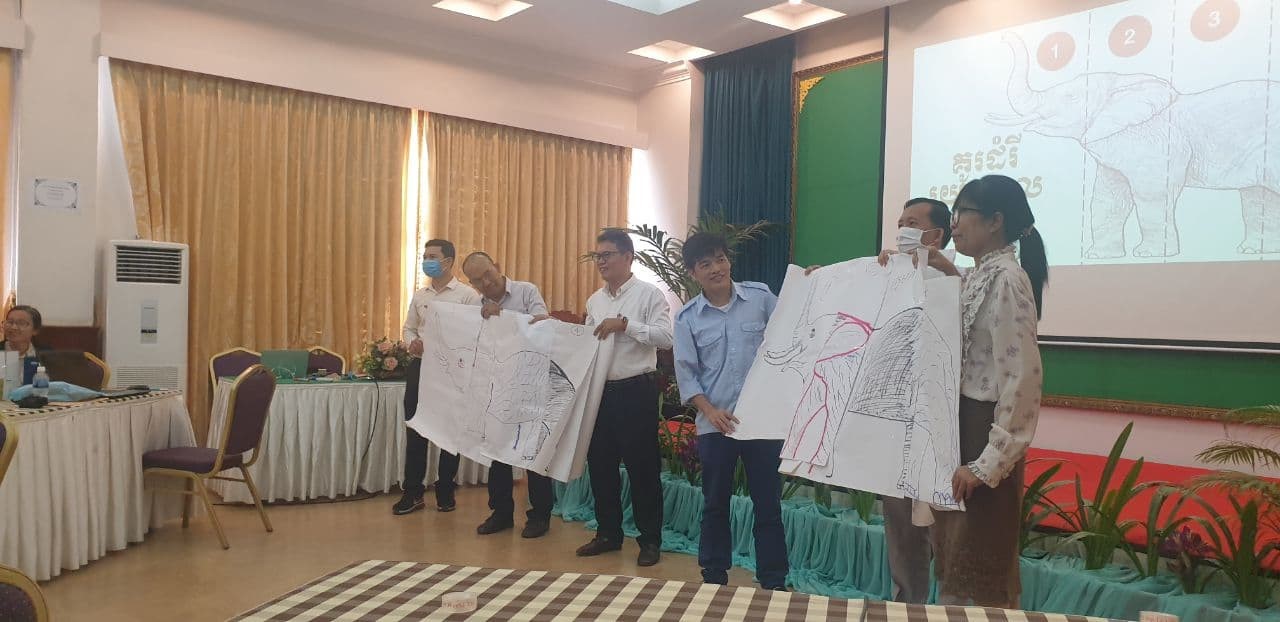
The workshop aims to guide the participants to align their academic practices with the national standard. During the workshop, the participants are grouped based on their expertise from each faculty and they have to identify the requirements of each standard and rate themselves against the elements of requirements. At the end of the discussions, each group has to nominate a group representative to present their strengths and challenges of their existing program. The audience are asked to give solutions or suggestions to the issues. To follow up, the participating departments have to write their assessment report at their program level.
28 June 2019
- 1. In the morning, Mr. Chorvy VONG presents the Quality Assurance Assessment tool for the program level.
- 2. In the afternoon, the participants are organized into group work under each faculty.
29 June 2019
- 1. Each working group has to present their discussion results.
- 2. Workshop organizing team wrap up the activities and suggest some solutions raised by the participants.
- 3. Participants have to evaluate the workshop content and activities through questionnaire.
Event Gallery
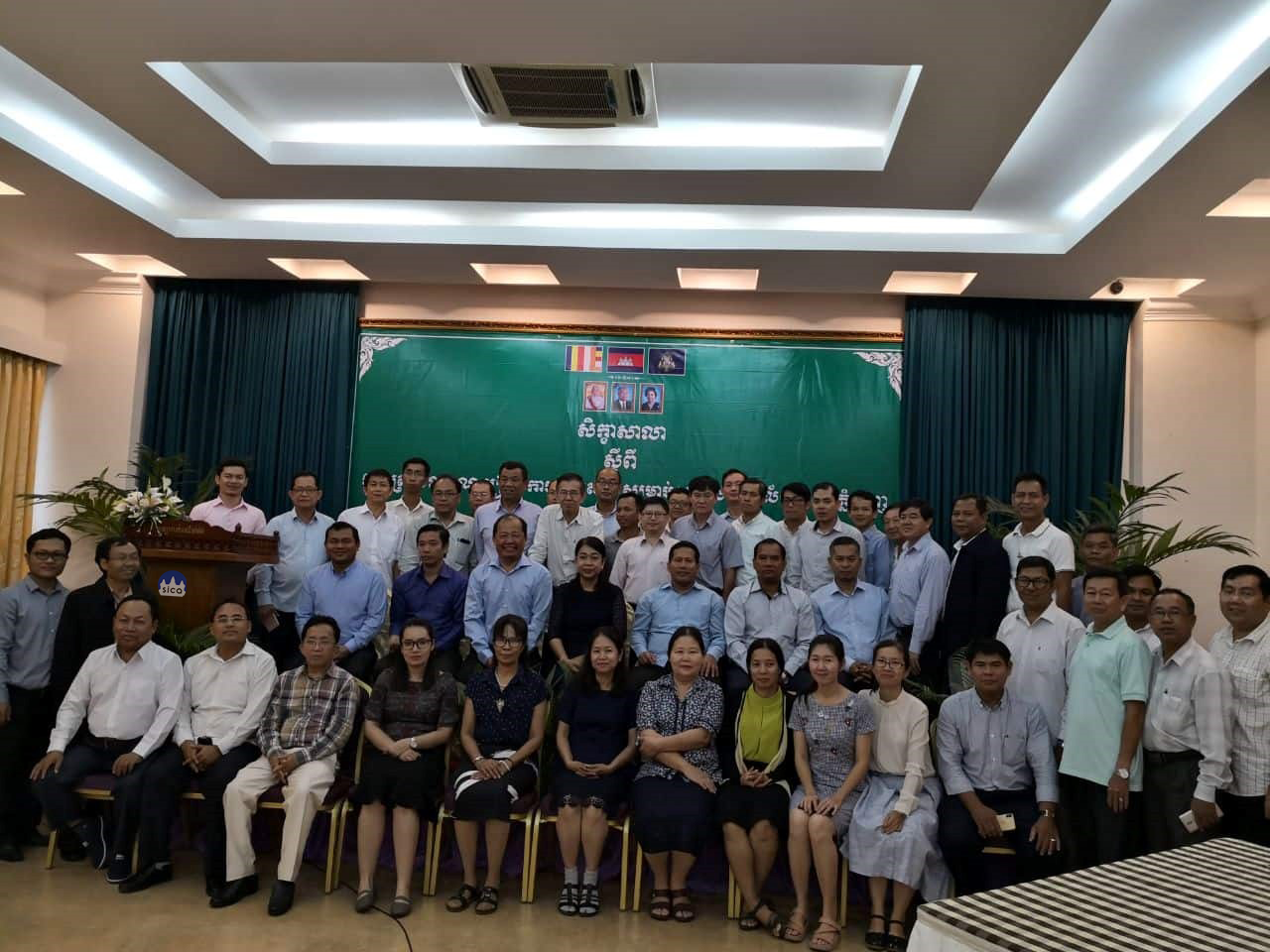
5
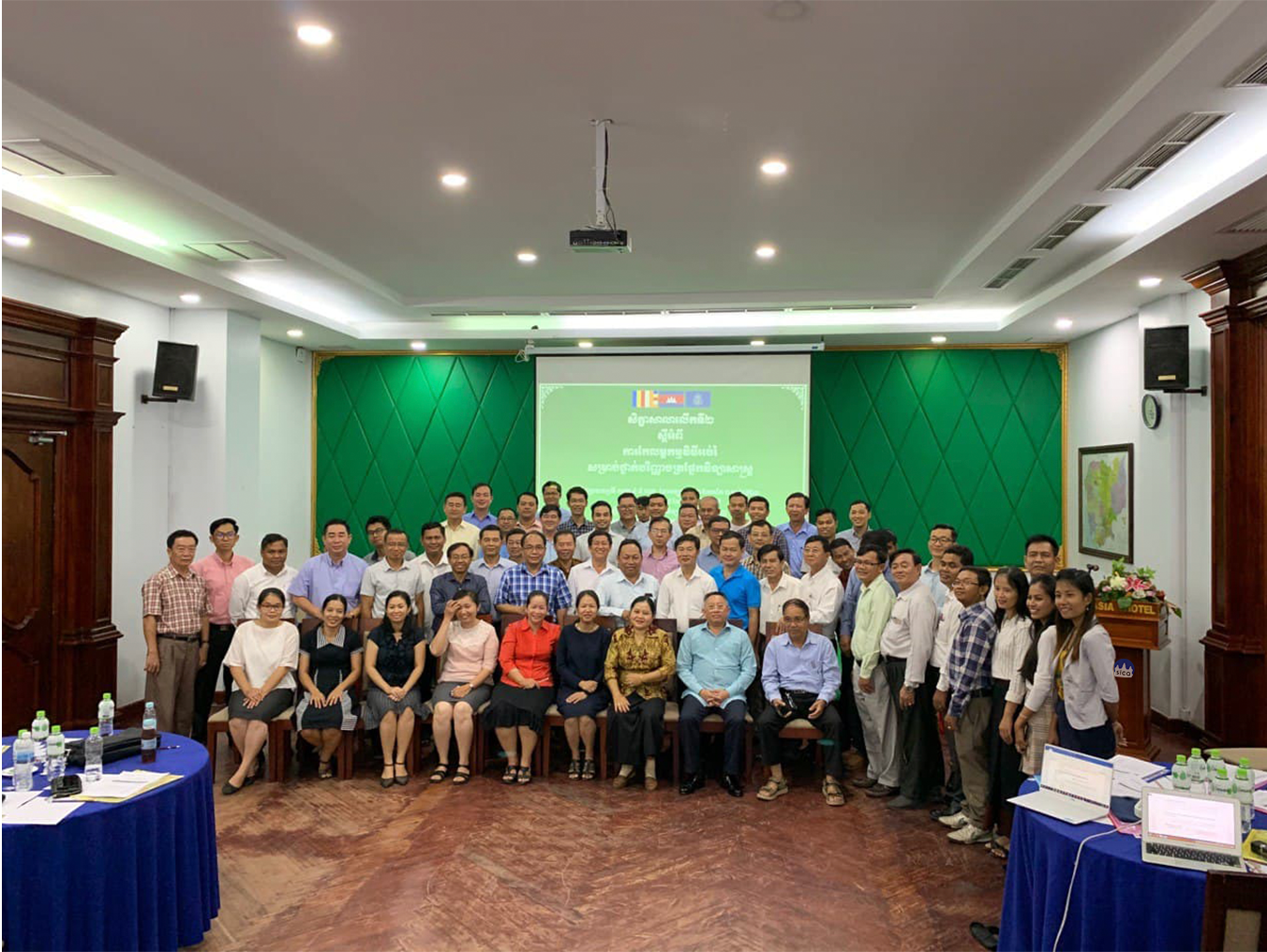
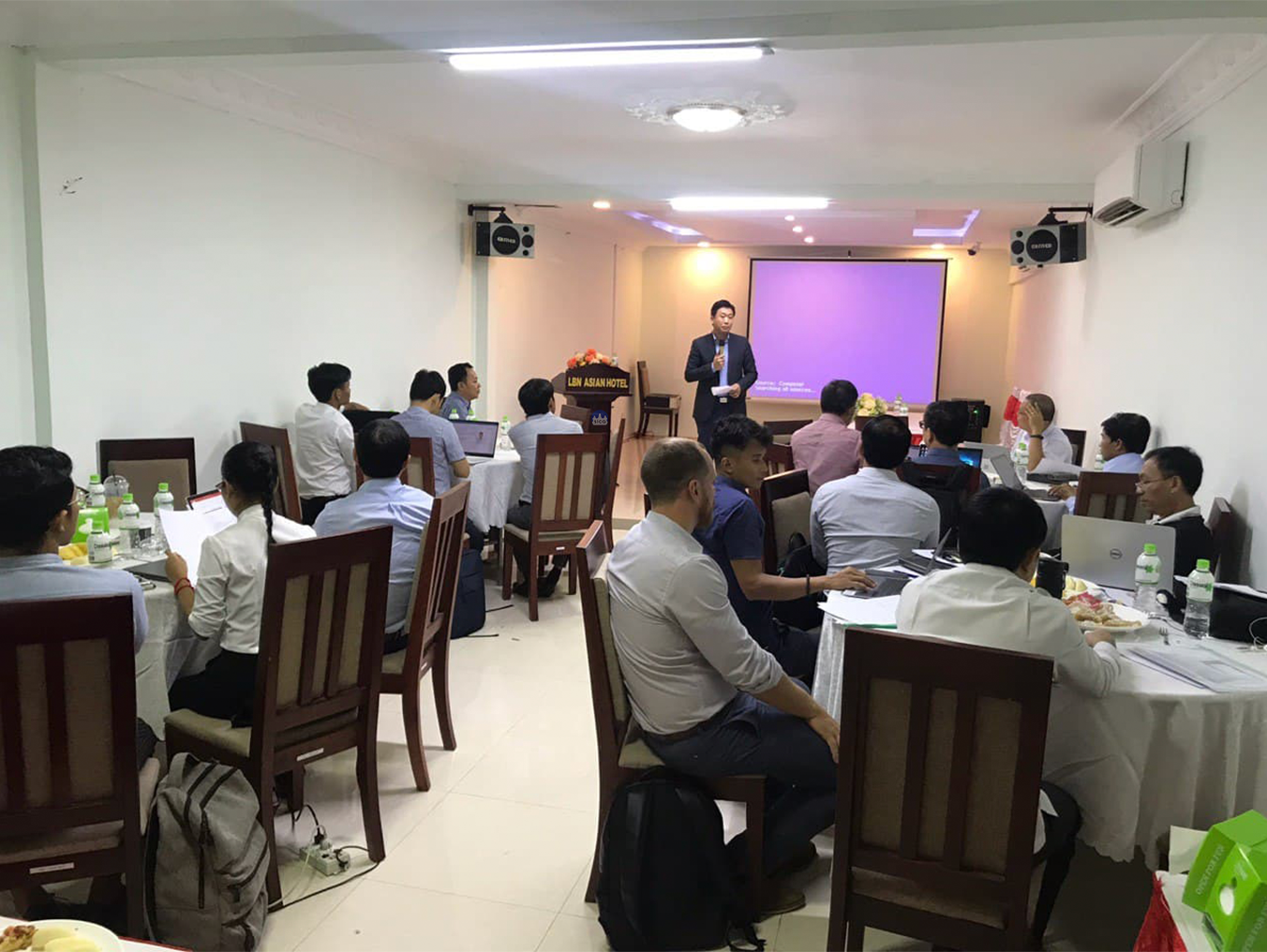
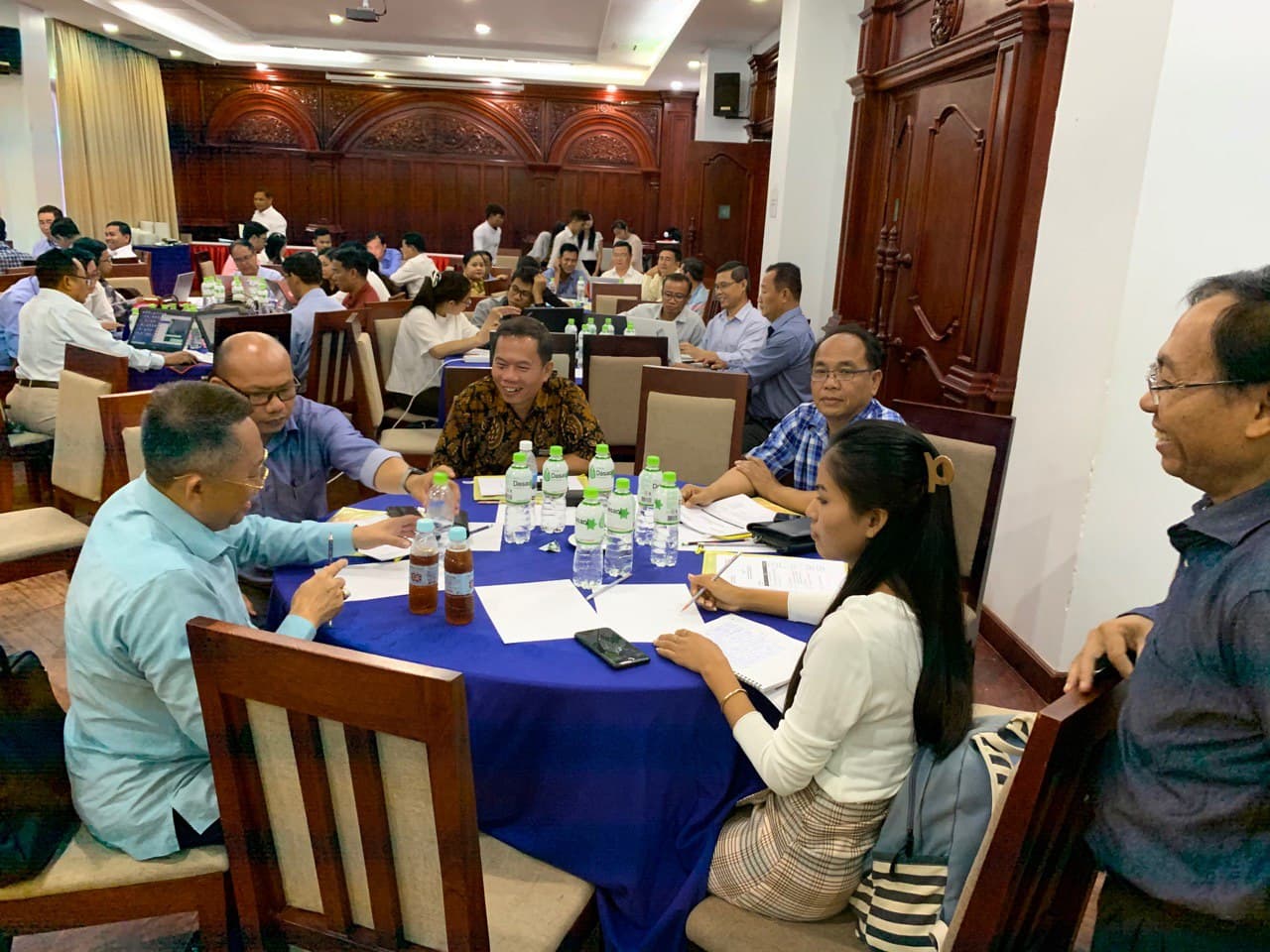
Curriculum Review and Gap Analysis
LBN Hotel Kampong Cham • 23–24 August 2019
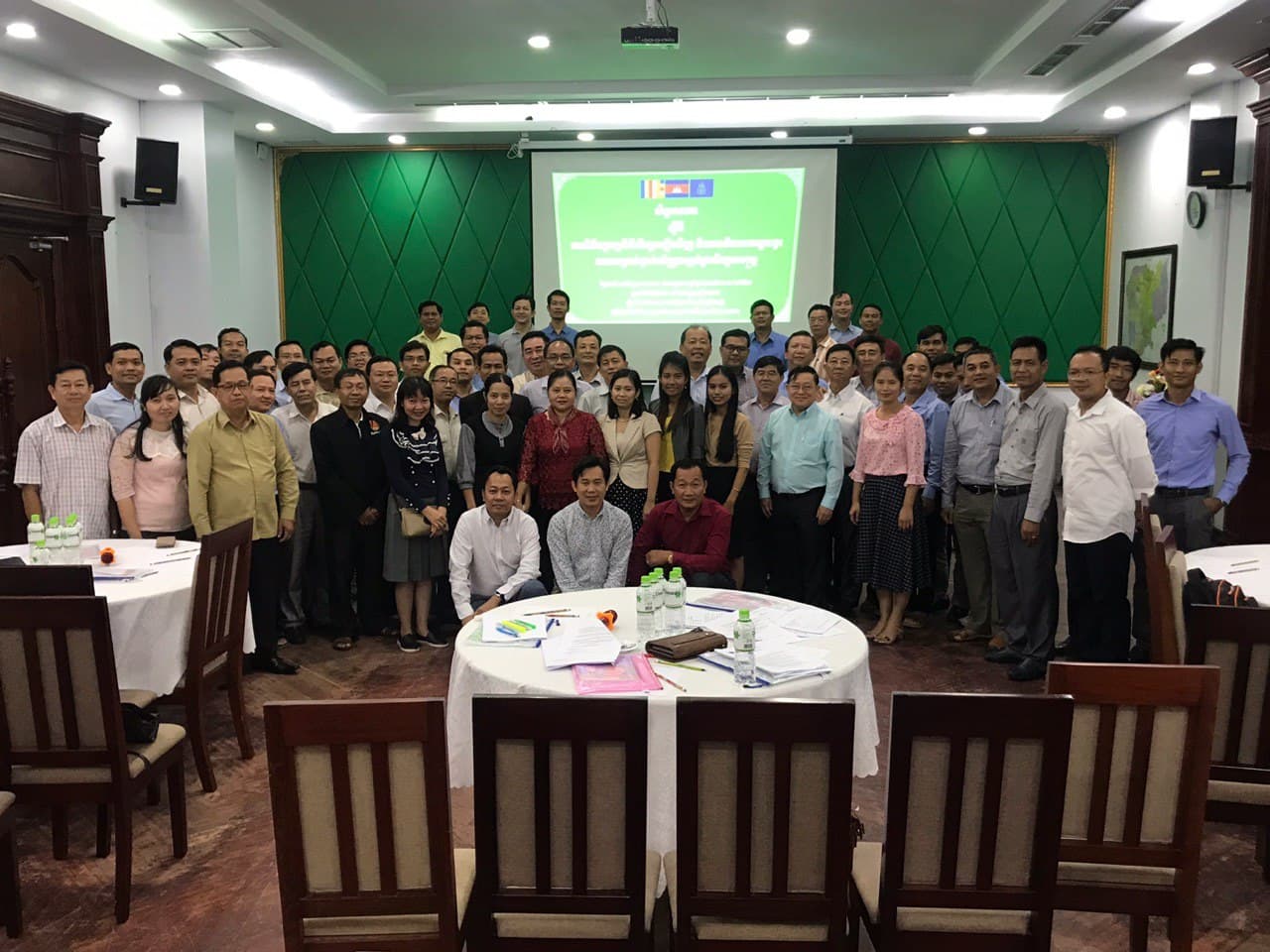
The workshop aims to have the Science Curricula improvement and is targeted only the Faculty of Science participants. The faculties are guided to revisit the department curriculum and formulate the program learning outcomes with Cambodia National Qualification Framework (CNQF). In addition, they are introduced the research theme in line with IR4.0 and required to develop the learning outcomes, assessment methods, and curriculum mapping. They are grouped according to their expertise and each group has to present the learning outcomes of existing curriculum to participants.
Target Objectives:
- 1. Identify the components of CNQF
- 2. Articulate specifications for learning outcomes
- 3. Classify learning outcomes using Bloom’s taxonomy
- 4. Write (or evaluate) student learning outcomes for your programs
- 5. Analyze how student learning outcomes to be assessed
23 August 2019
- 1. In the morning, Mr. Chorvy VONG presents the participants on CNQF requirement and how to align the Course Learning Outcomes (CLOs) and Program Learning Outcomes (PLOs) with CNQF.
- 2. In the afternoon, Dr. Chey Chan Oeurn presents the participants on the research and innovation of Scientific theme and impact of IR 4.0.
- 3. Each group works on the existing curricula and revises their learning outcomes.
24 August 2019
- 1. Each working group has to present their new learning outcomes of the curriculum and the course syllabi.
- 2. The other participants provide the feedback and question the alignment of CNQF.
- 3. Workshop Team wraps up the activities and suggests some solutions raised by the participants.
- 4. Participants are required to produce the course syllabi and be ready for the next academic year.
Event Gallery
6
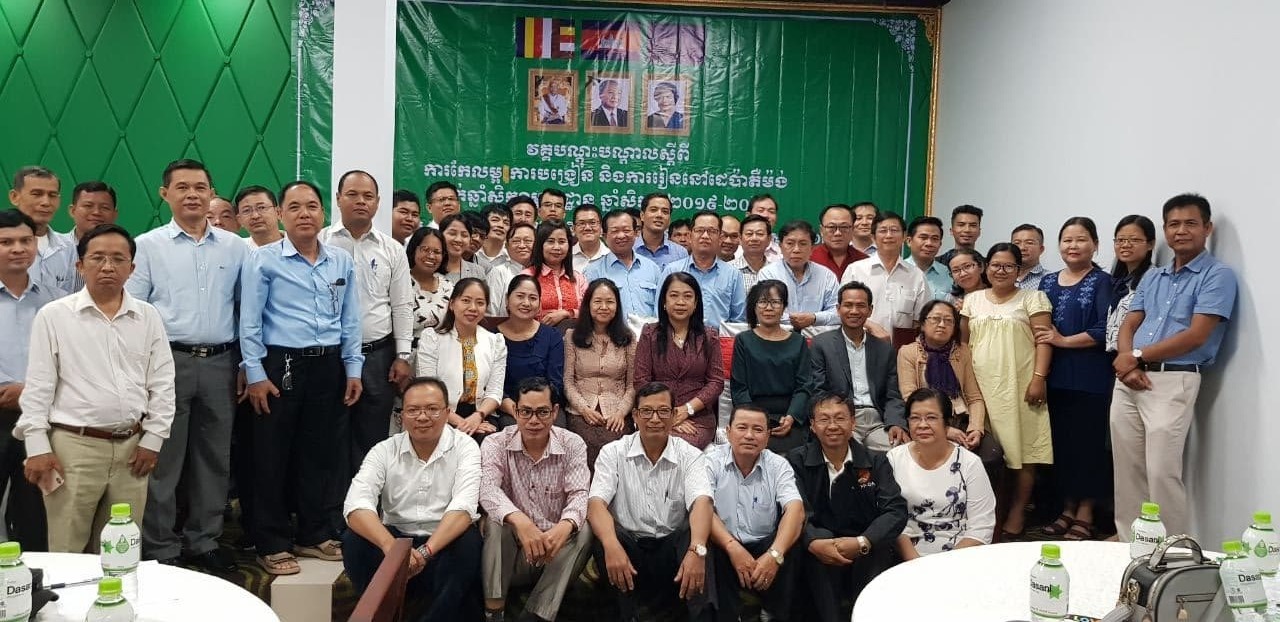
Enhancing of Teaching and Learning Strategies
LBN Hotel Kampong Cham • 6–7 September 2019
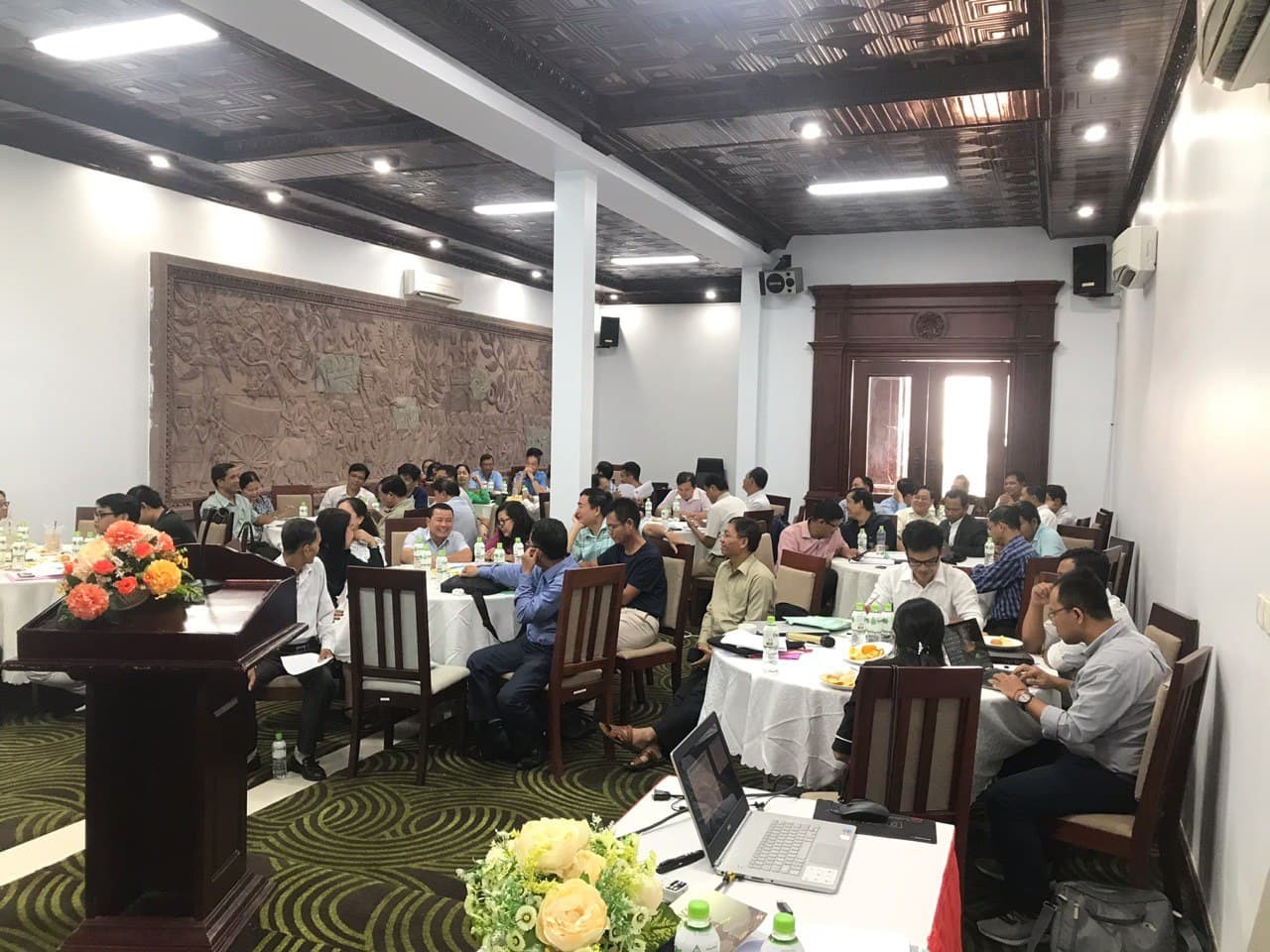
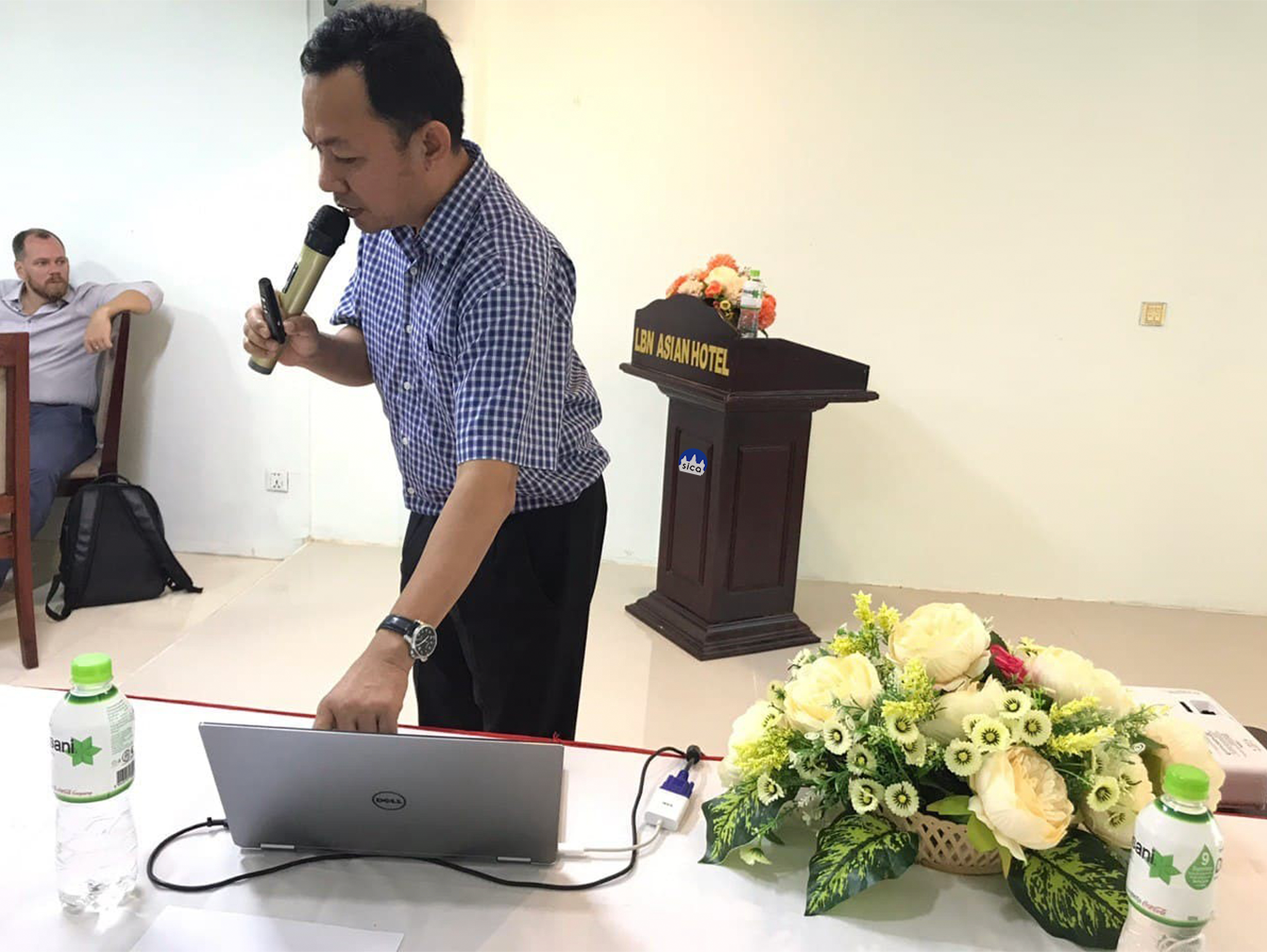
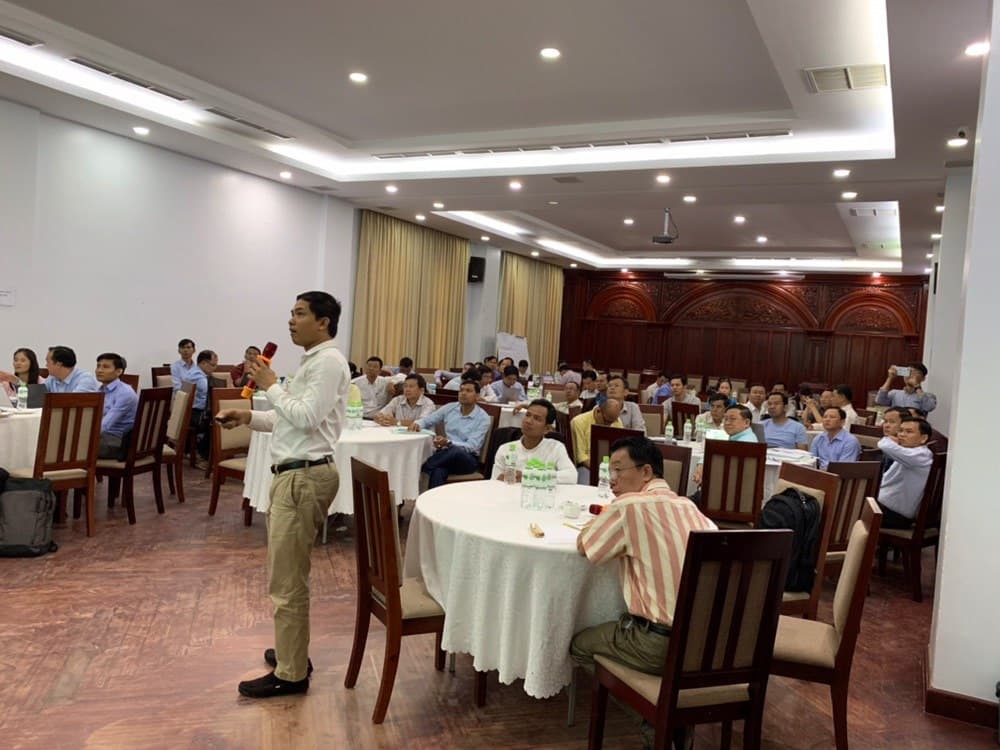
The workshop is to provide the university faculties from foundation year with the changing education paradigm, choosing appropriate teaching methodologies, the development of constructive alignment of instructional and assessment methods, and curriculum mapping. The participants are required to verify the learning outcomes and the assessment methods. They have to discuss how they teach and assess the students’ learning outcomes. At the end of group discussions, each group has to present the discussion results to participants. The audience are asked to give solutions or suggestions to the issues.
6 September 2019
- 1. In the morning, Mr. Chorvy VONG guides the participants on how develop and measure the Course Learning Outcomes (CLOs) and Program Learning Outcomes (PLOs).
- 2. He presents the shift of education paradigm and influence of IR4.0 on education.
- 3. In the afternoon, the participants are grouped under the areas of subjects they are teaching.
7 September 2019
- 1. Each working group has to present their discussion results.
- 2. The other groups have to provide the feedback and comments on the group work.
- 3. Workshop Team wraps up the activities and suggests some solutions raised by the participants.
- 4. At the end of the workshop, they have to evaluate the workshop content and activities through questionnaire.
Event Gallery
7
PLOs Assessment
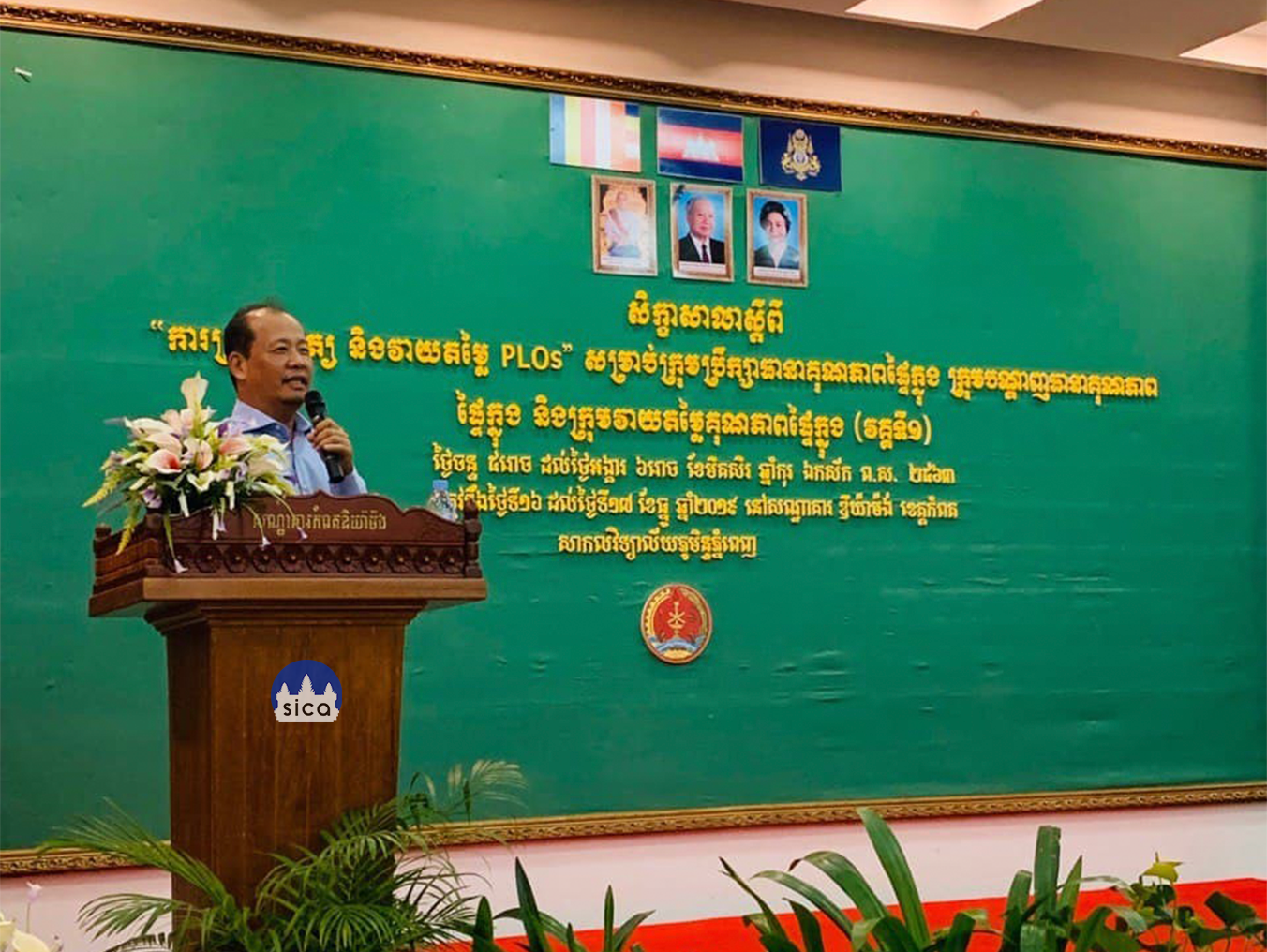
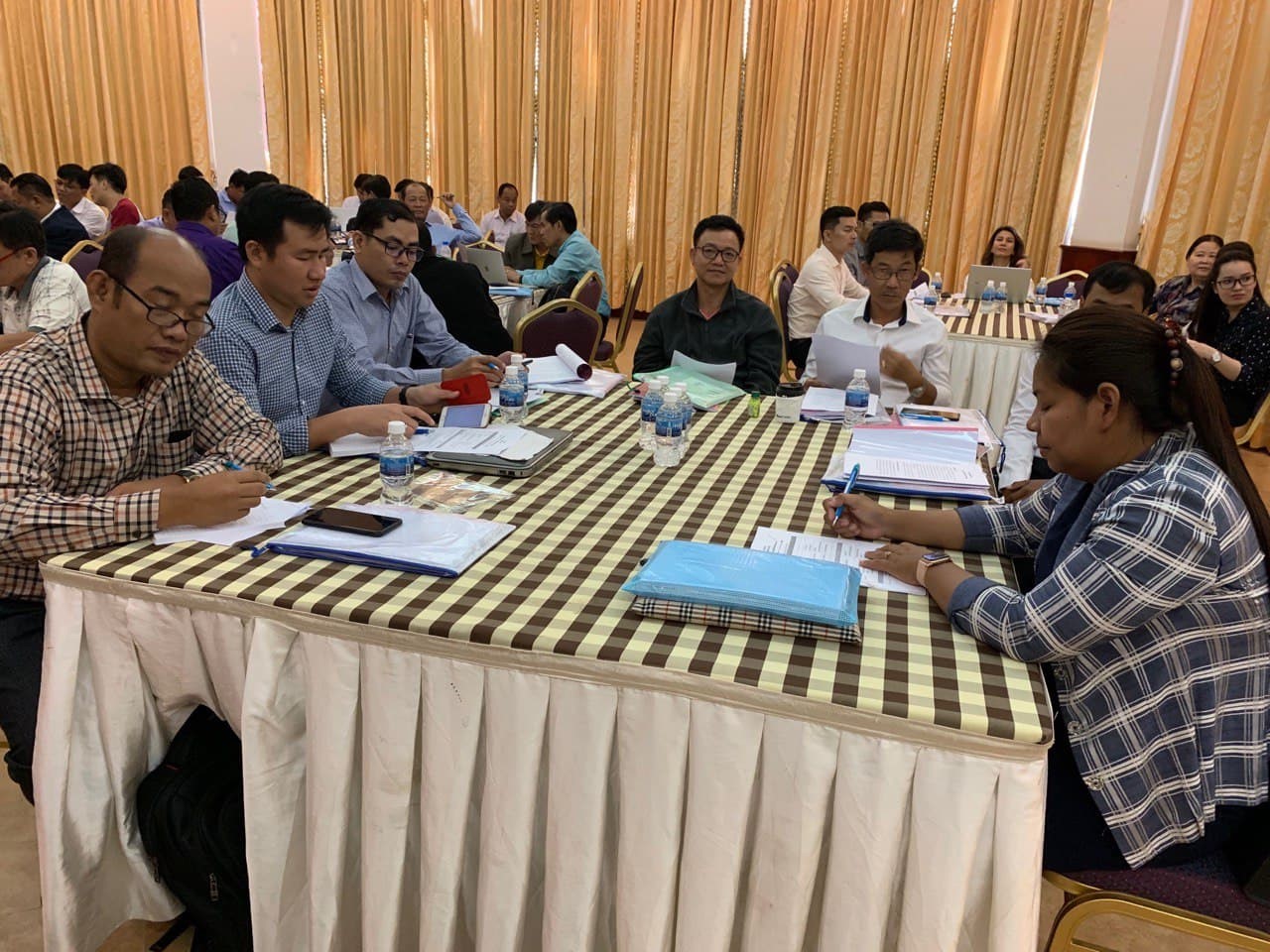
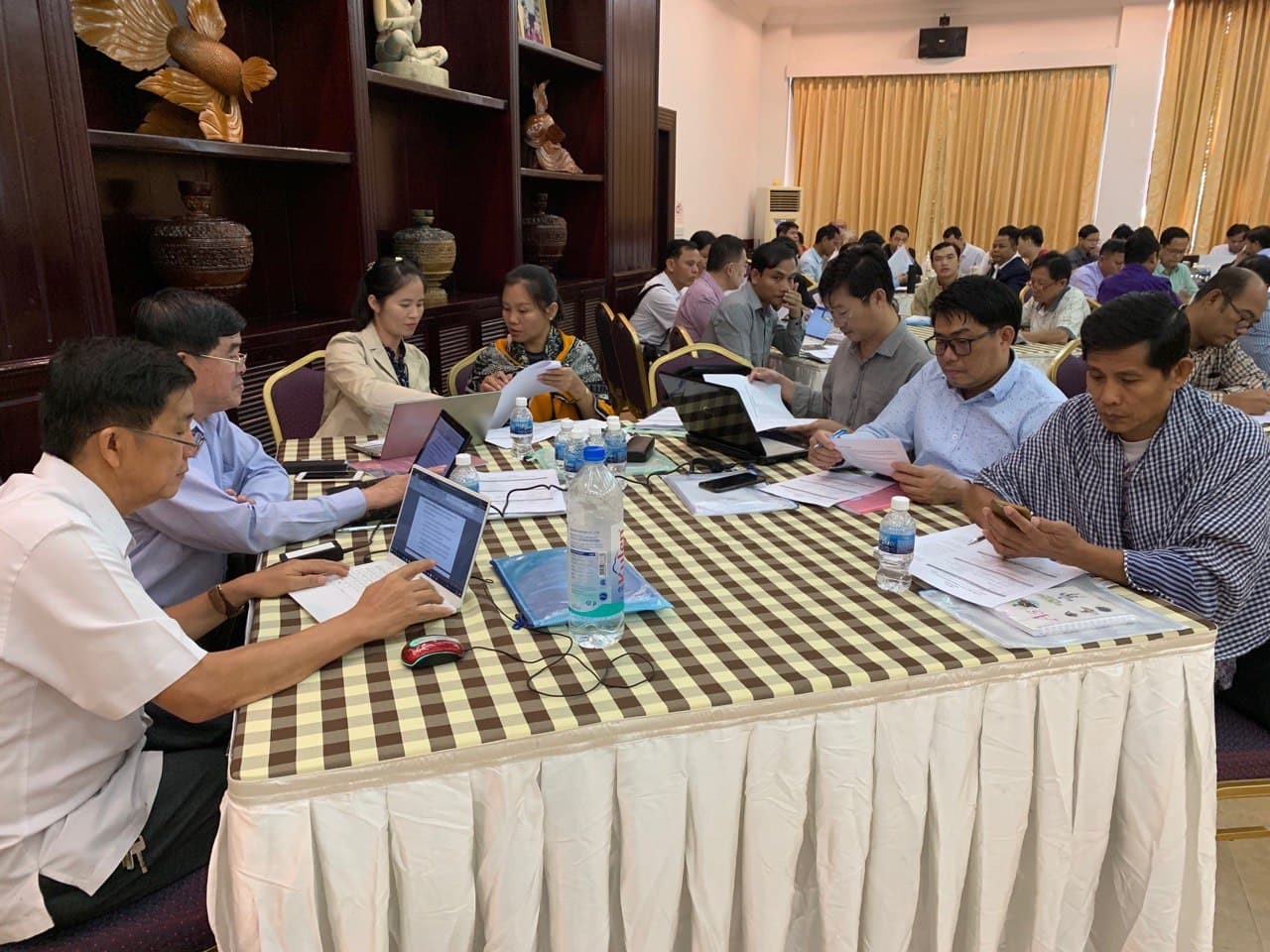
Diamond Hotel Kampot • 16–17 December 2019
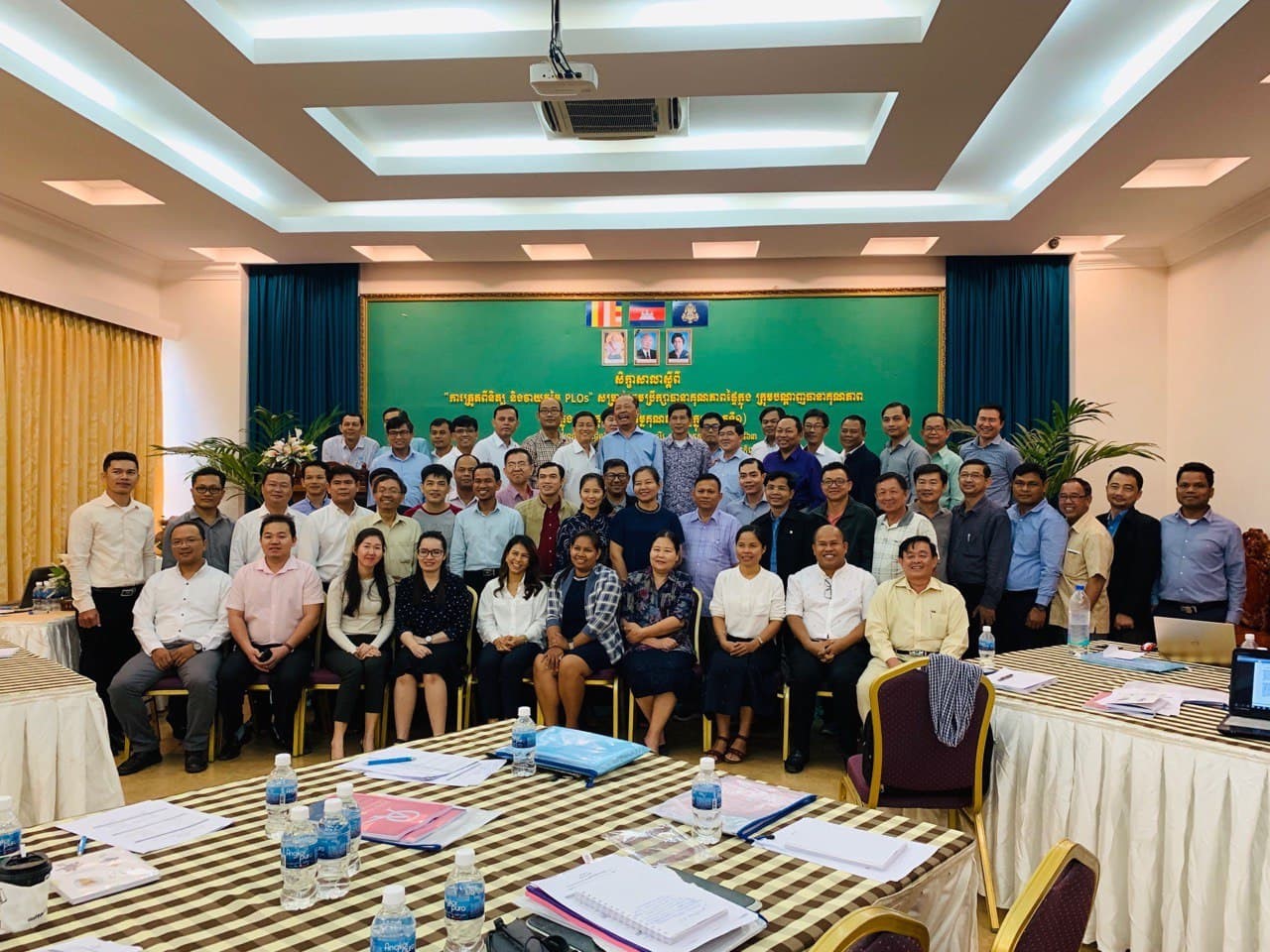
The workshop is to provide the IQA-Network across the university with the knowledge of Program Learning Outcomes (PLOs) Assessment by applying Bloom Taxonomy and QA Assessment Tool at Program Level. The participants identify the different levels of PLOs and CLOs and their alignments of Instructional and Assessment Methods. In addition, the participants have to discuss the roles and responsibility of IQA-Network and IQA Council. The main purposes of this discussion are to prepare the IQA task forces for program assessment. They have to do exercises on CLOs and PLOs to find out how they are mapped and aligned to Cambodia National Qualification Framework. During the workshop, each group discussion has to present the findings and suggestion to the audience.
16 December 2019
- 1. In the morning, Mr. Chorvy VONG presents the participants on formulation of Course Learning Outcomes (CLOs) and Program Learning Outcomes (PLOs) by applying Bloom Taxonomy.
- 2. He presented the different level of program and institutional Assessment.
- 3. In the afternoon, the participants are grouped to work on samples of existing course syllabi and a curriculum.
17 December 2019
- 1. Each working group has to discuss the roles and responsibility of IQA-Network and IQA Council at the University.
- 2. Each group has to present their findings on the previous day and other groups have to provide the feedback and solutions to the questions.
- 3. Workshop Team wraps up the activities and suggests some activities for the following academic year.
- 4. At home, participants have to their department to correct the CLOs and PLOs for the next academic year.
- 5. The workshop ends with evaluation on the workshop content and activities through questionnaire. In short, the feedback will be used to improve the next capacity building workshop.
Event Gallery
8
Development of 5-year QA Strategic Plan and Guideline for IQ Assessment
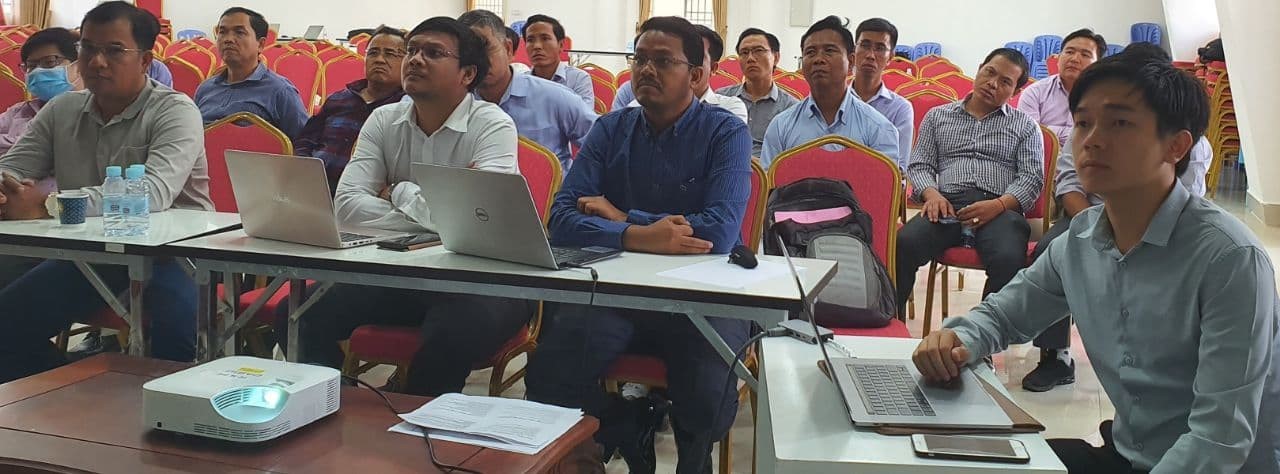
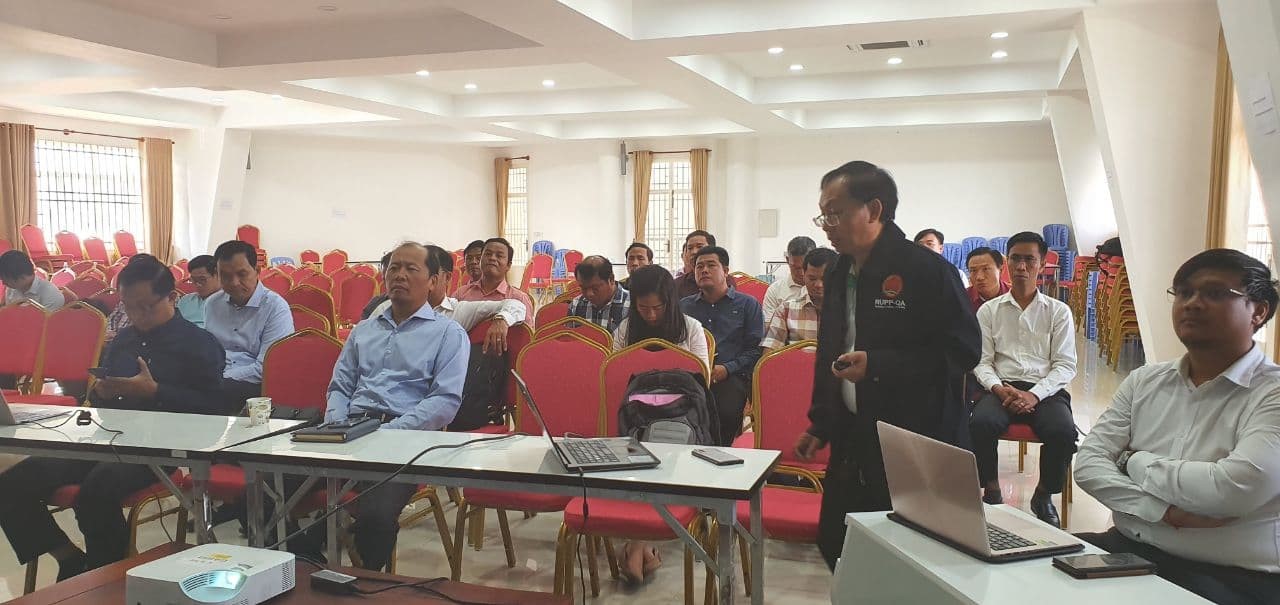
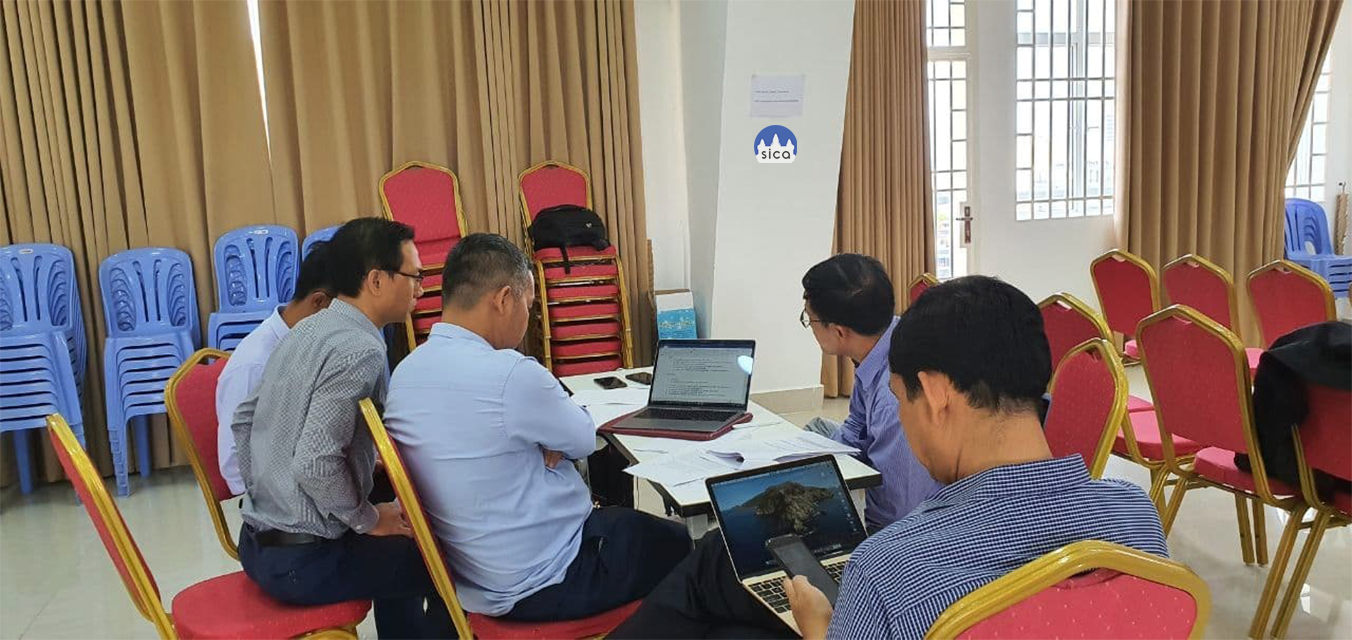
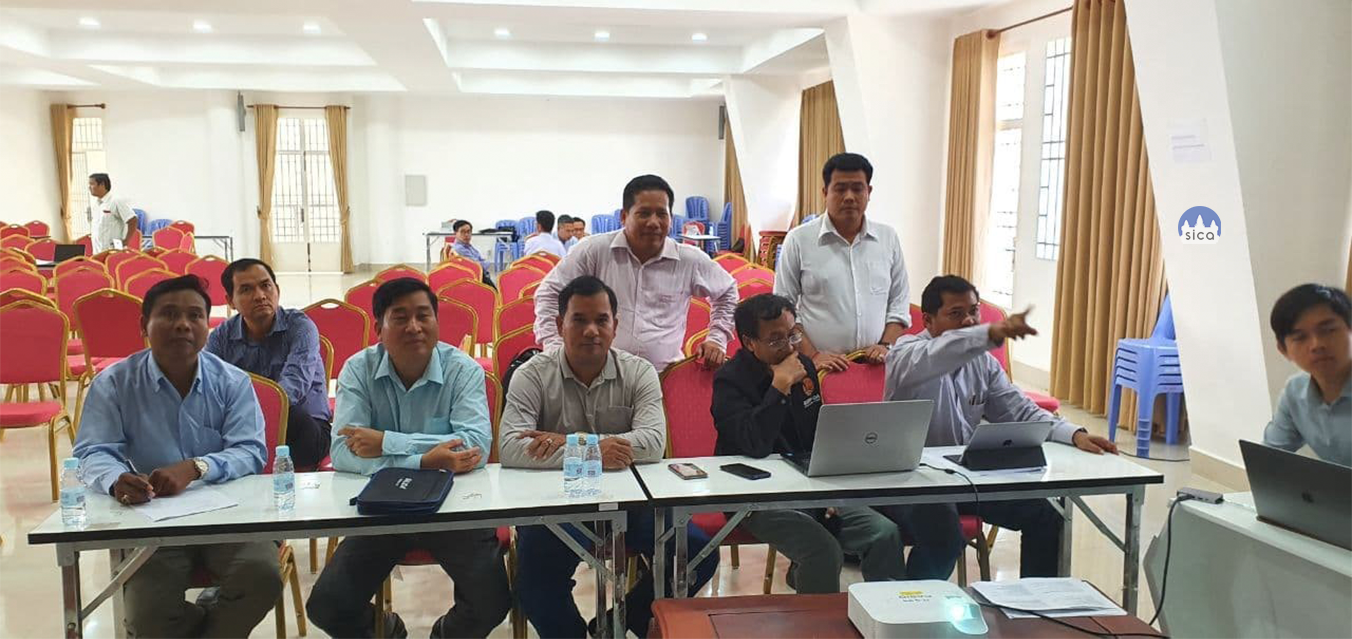
RUPP STEM Building • 6–7 March 2020
The workshop aims to produce a five-year QA Strategic Plan and a guideline for Internal Quality Assessment to serve the needs of quality assessment amongst six universities in Cambodia including RUPP, CSUK, SRU, MCU, UBB, and UHST. This guideline helps the six Cambodian universities promote the quality practices through measuring the quality process, inputs, and outputs at the program level. The participants from the six universities have to define the areas to be measured in their context and join developing assessment tool which leads to write self-assessment report (SAR). During the workshop, each university has to develop a standard and its indicators. These standards to gauge the academic performance include program learning outcomes, program content, structure and specification, teaching and learning approach, student assessment and service, facility and infrastructure, output, and internal quality improvement.
6 March 2020
- 1. In the morning, Mr. Chorvy VONG presents RUPP-QA Strategic Plan and the assessment tool used by AUN-QA, Cambodia National standards.
- 2. He compares the indicators of program assessment and institutional assessment.
- 3. In the afternoon, Mr. Tep Neavea, ACC member, presents the key components of Cambodia National Standards.
7 March 2020
- 1. Each university prepare their five-year strategic plans.
- 2. Each university Team develop the indicators to support the standards.
- 3. The Project Team wraps up the activities and suggests schedule to submit the final work.
- 4. To follow up, the participants have to finalise their five-year QA strategic plans and the indicators of standards.
Event Gallery
9
First Roundtable Consultation Workshop on Self-Assessment Report (SAR)
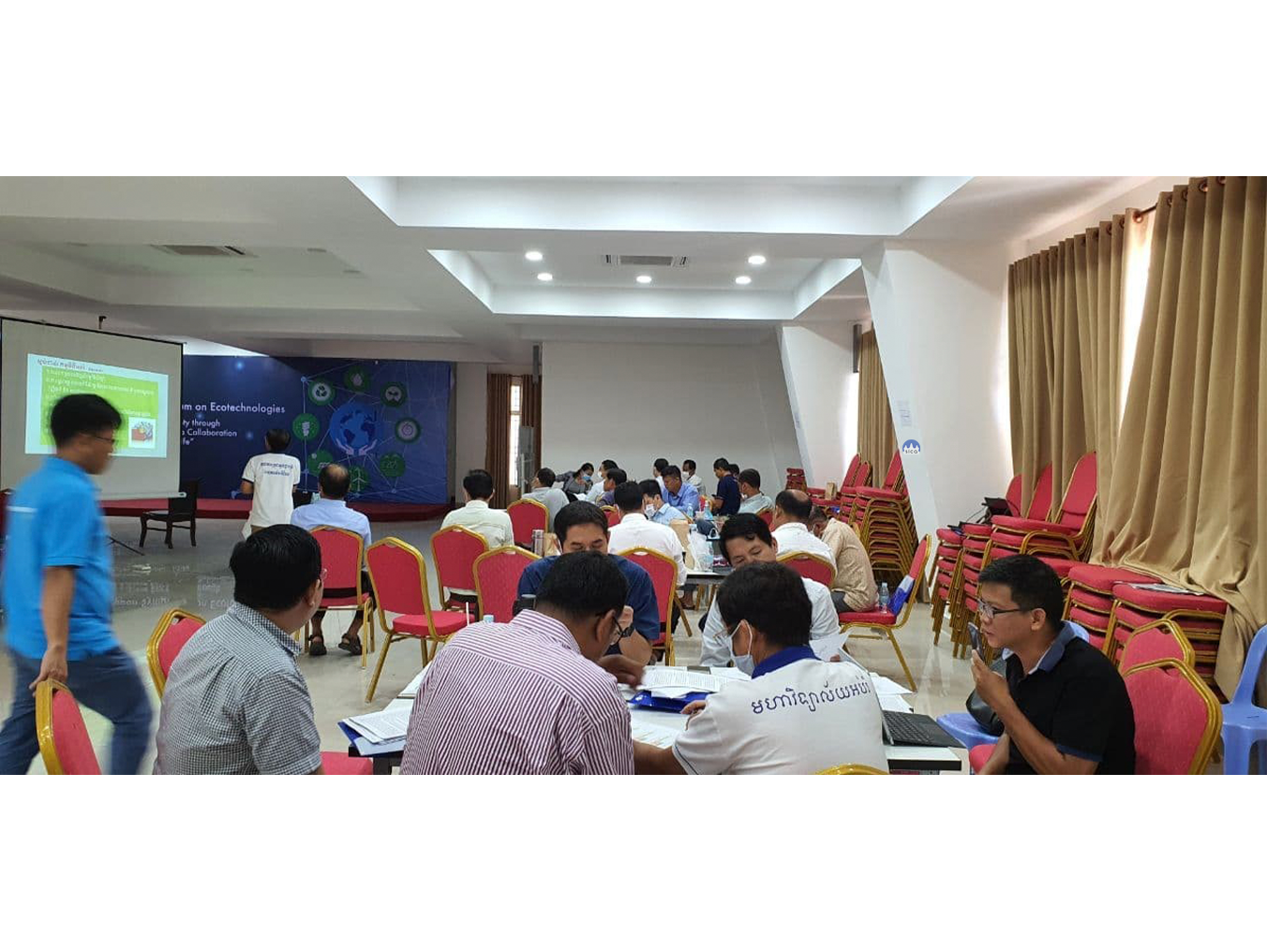
RUPP STEM Building • 16–17 May 2020
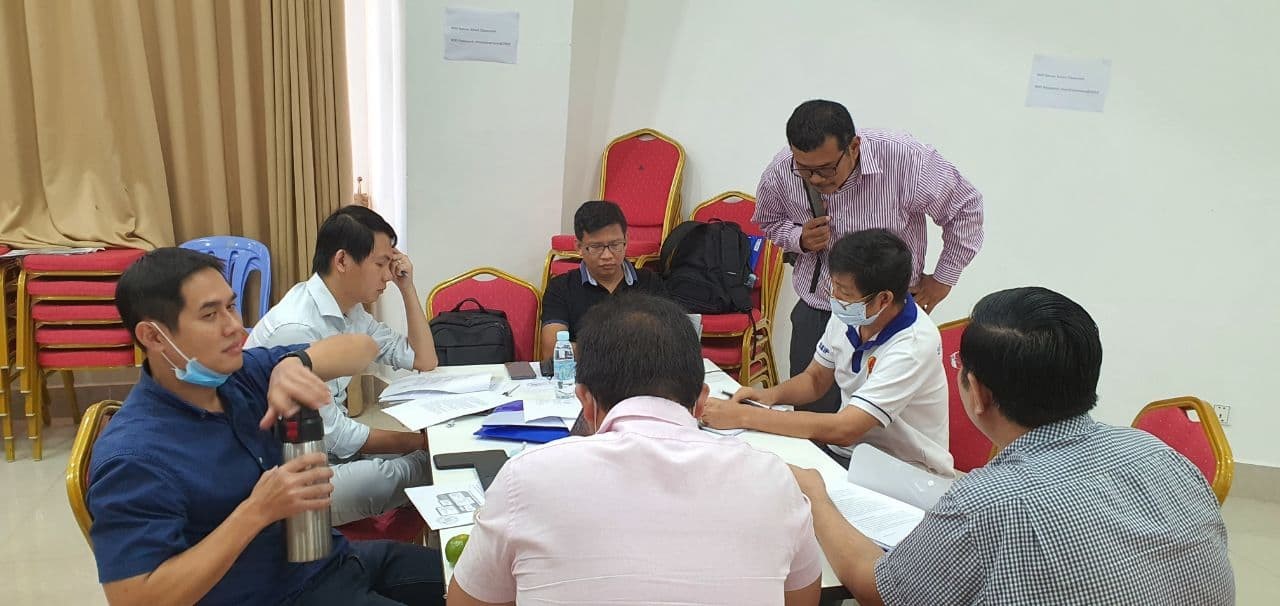
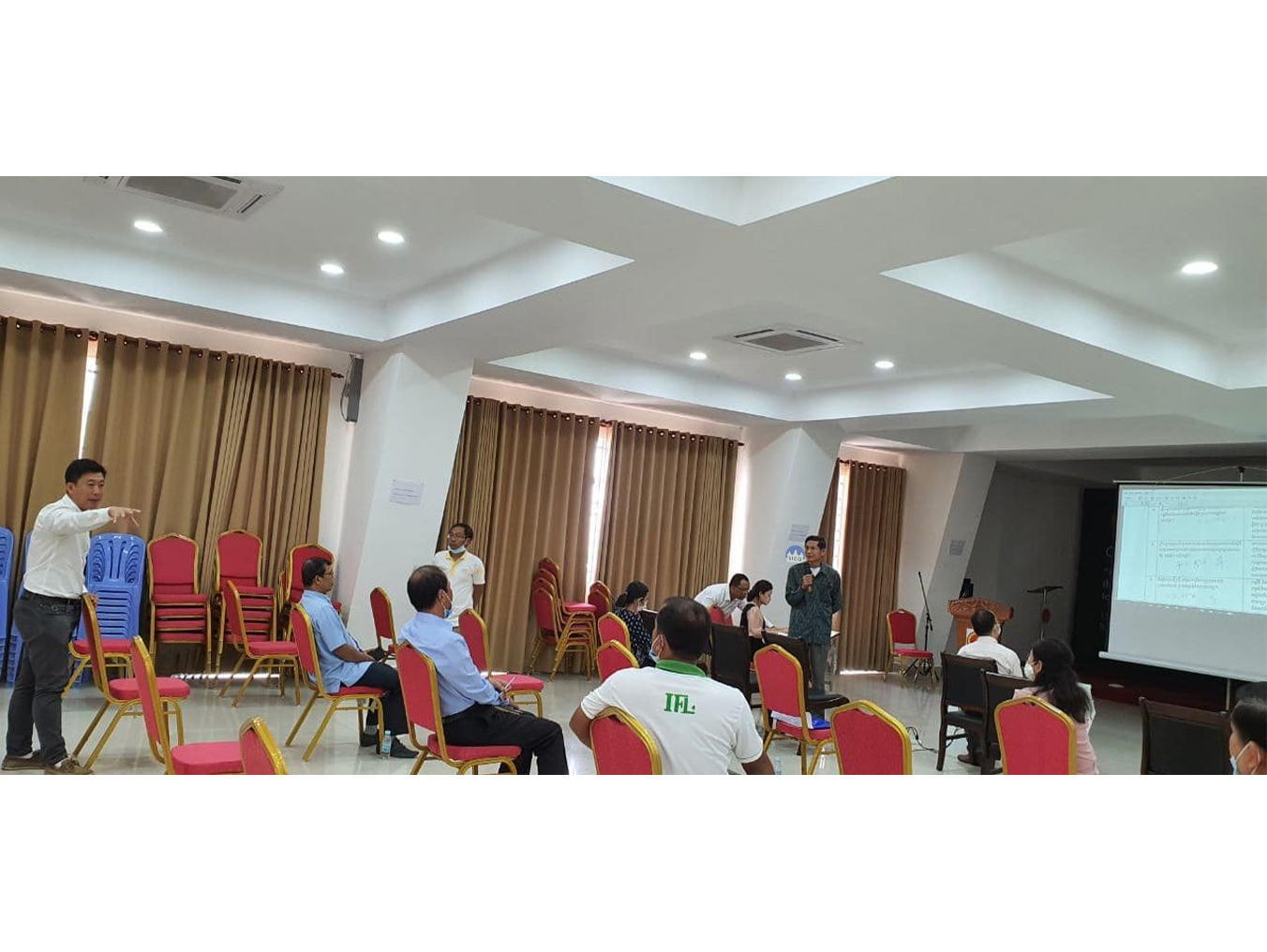
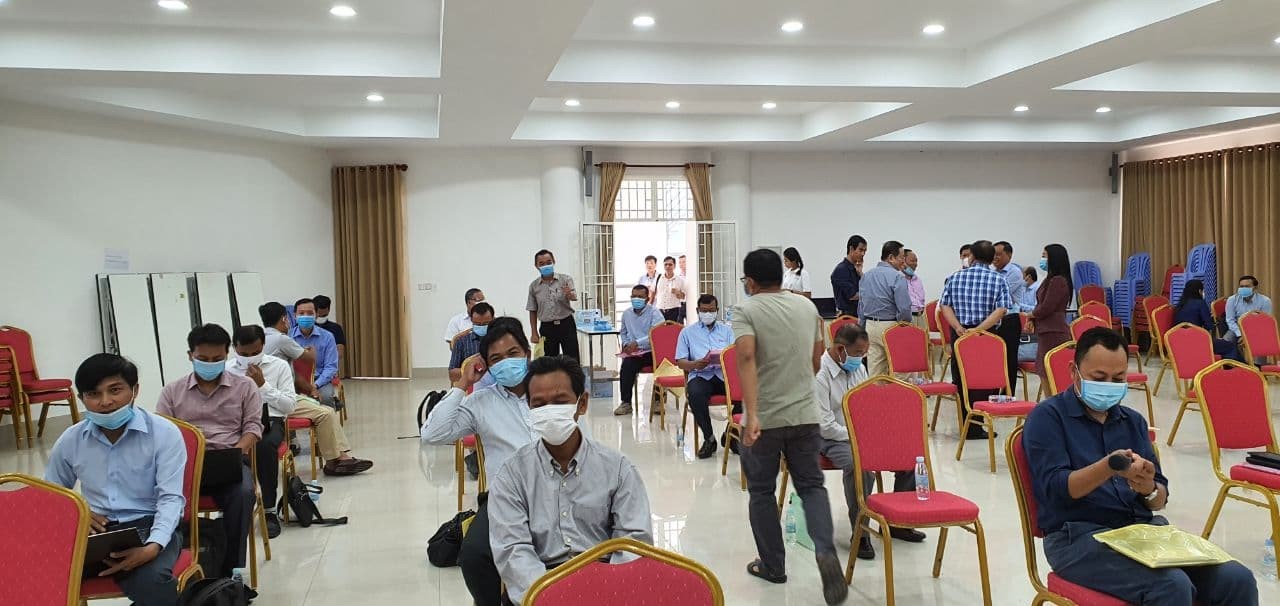
The workshop is to prepare the university for institutional accreditation by the Accreditation Committee of Cambodia (ACC). The participants from 47 program under the university management are grouped to prepare assessment report on the institutional standards. The groups of participants have to score each indicator based on the sufficient evidences to support. In group work, participants have to evaluate the academic performance if it meets the requirements. The Quality Assurance Office (QAO) has to consolidate all information produced by the workshop.
16 May 2020
- 1. In the morning, Mr. Chorvy VONG presents the key components of each standard.
- 2. In the afternoon, the participants work on self-assessment report and discuss the areas for improvement.
17 May 2020
- 1. Each working group presents the outcomes of assessment.
- 2. The other participants challenge and propose the gaps of assessment.
- 3. To follow up, the QAO has to polish and finalize the Self-Assessment Report (SAR) and to be ready for internal assessment.
Event Gallery
10
Second Roundtable Consultation Workshop on Self-Assessment Report (SAR)
RUPP STEM Building • 13–14 July 2020
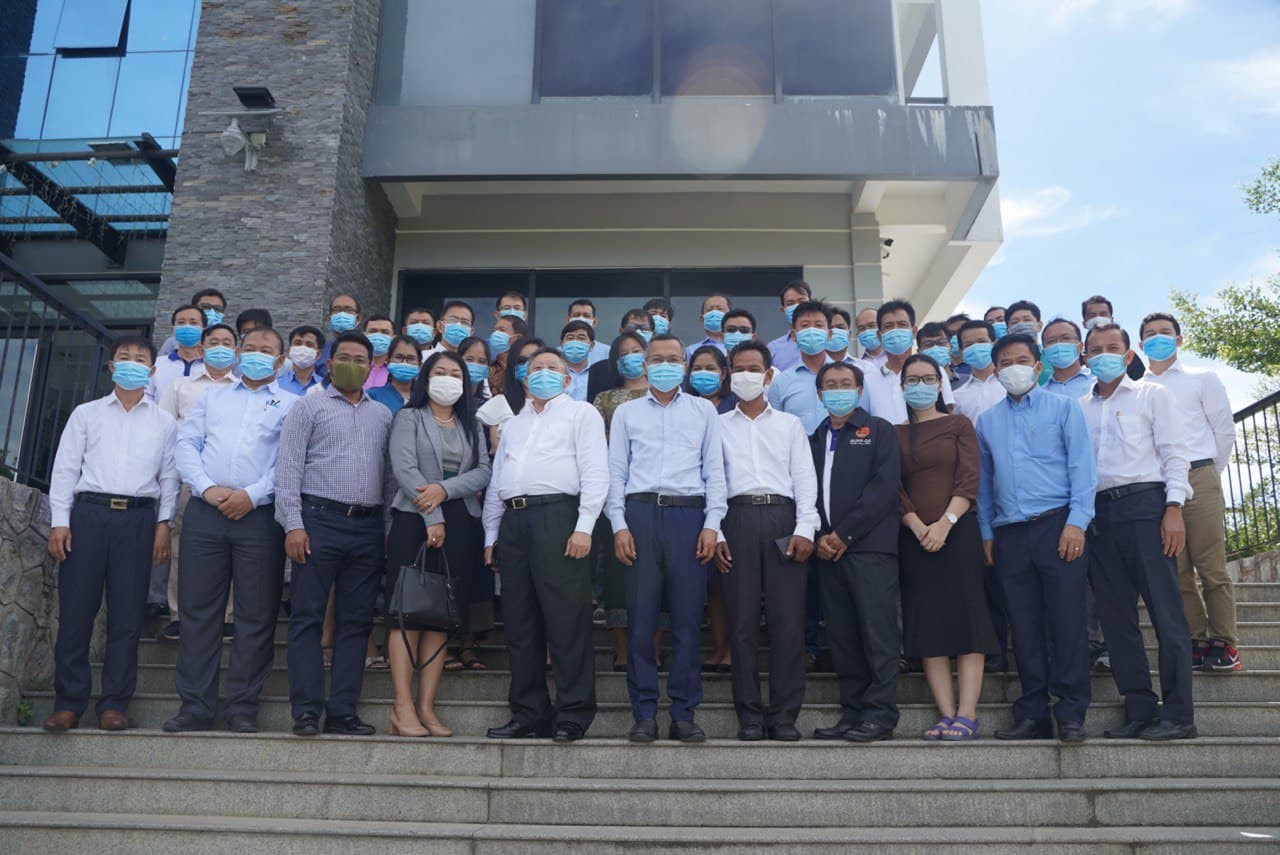
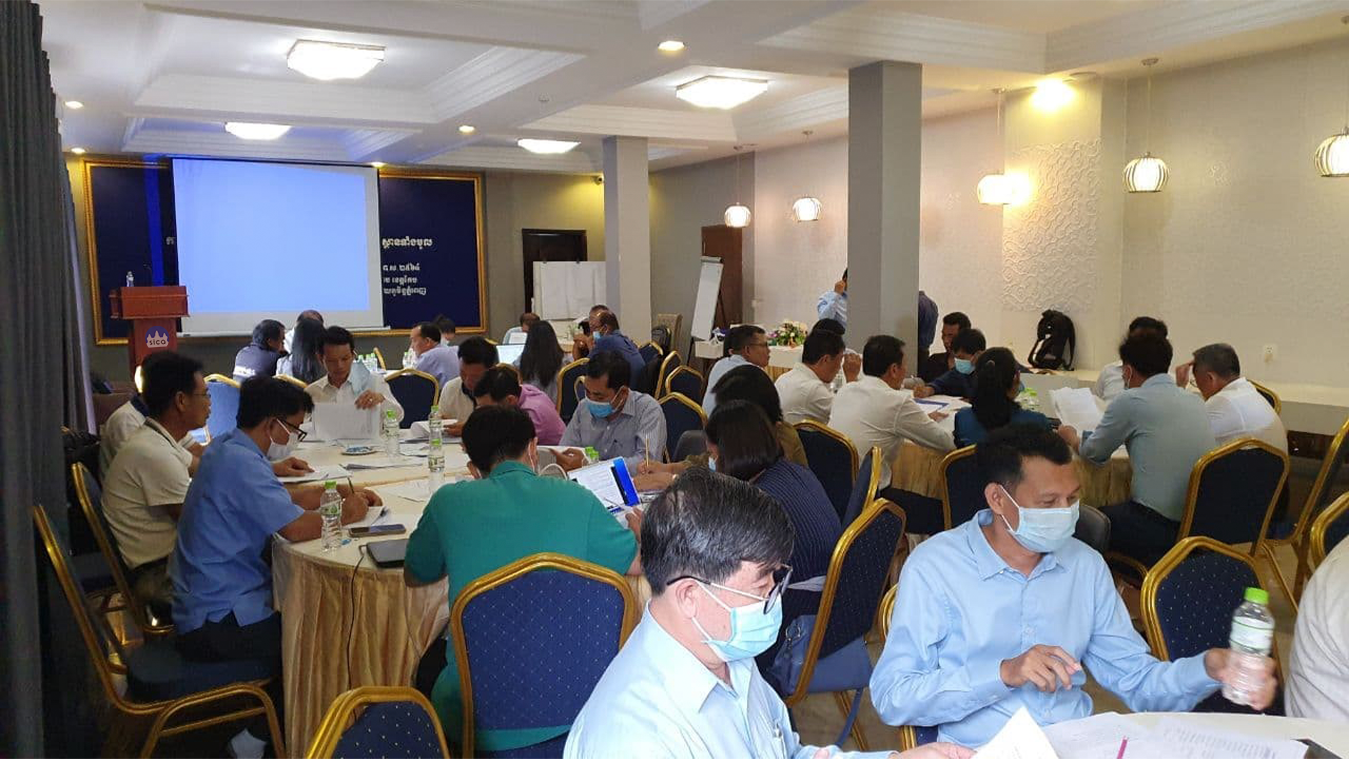
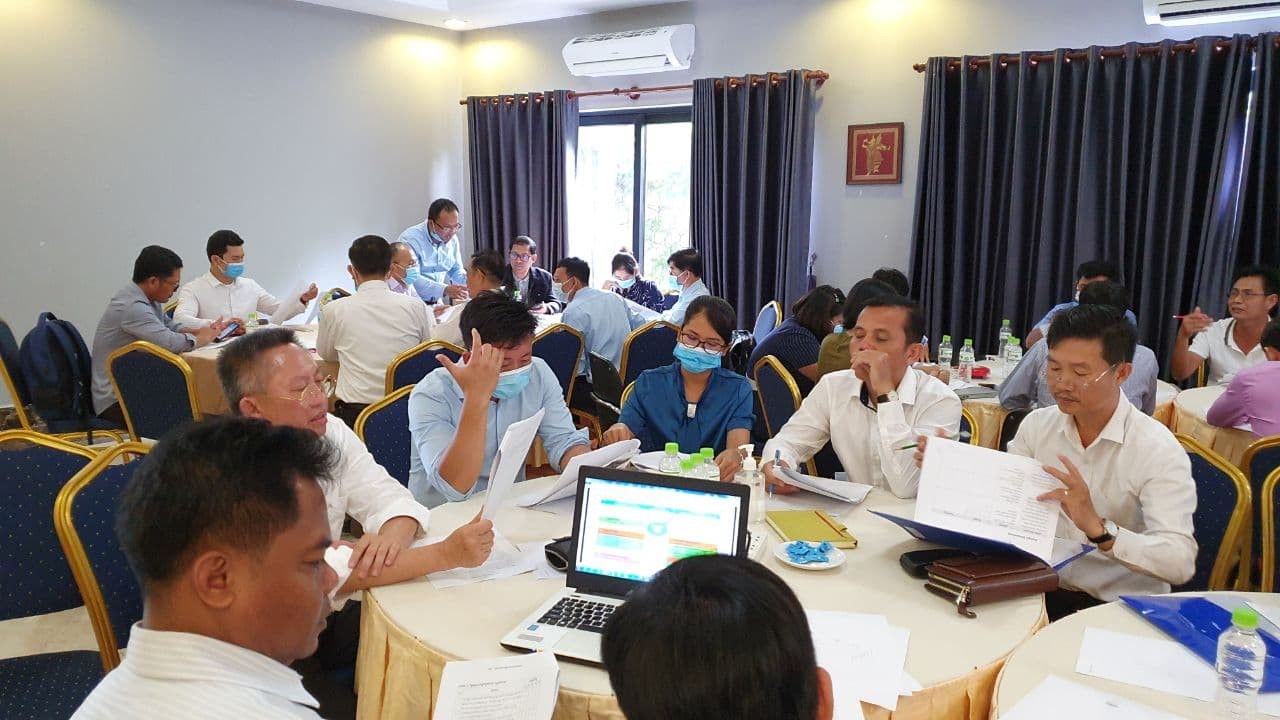
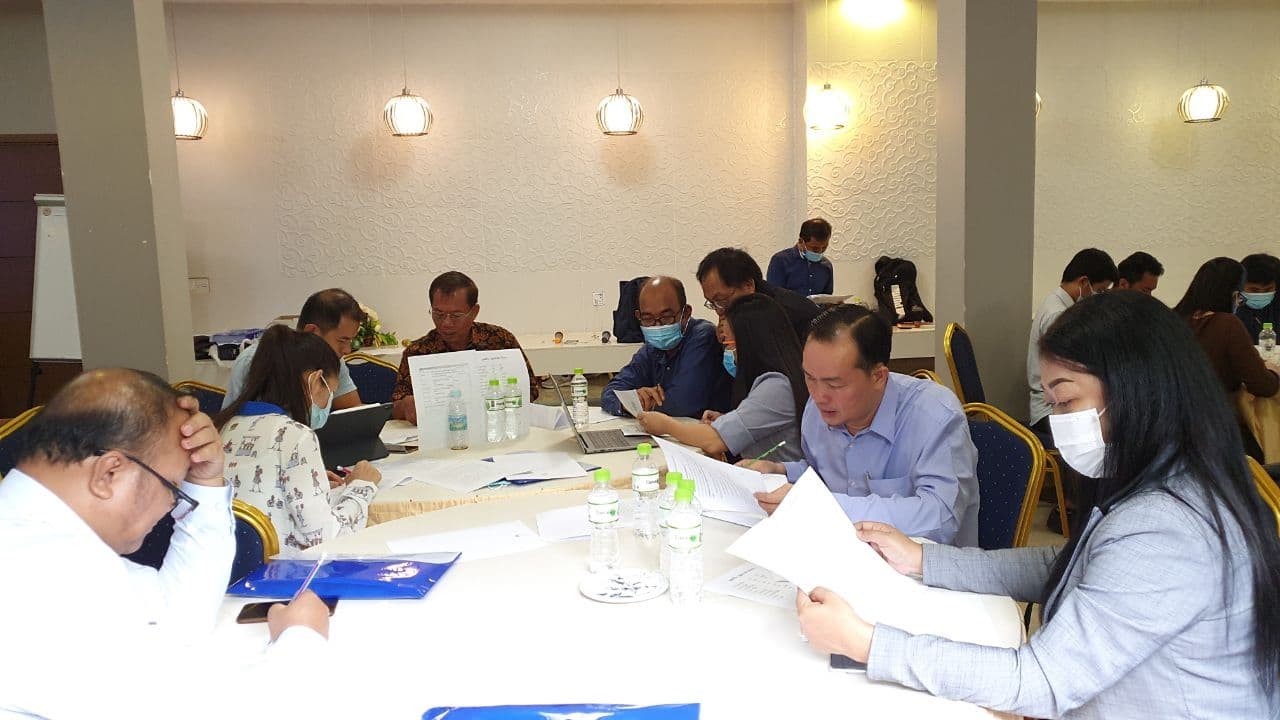
The workshop is to prepare the university for institutional accreditation by the Accreditation Committee of Cambodia (ACC). This workshop involves with the majority of University stakeholder including the IQA-Network and the Deans, Vice-Deans of five faculties. They are grouped according to their roles and responsibilities to assess on the institutional SAR. The groups of participants have to identify the strength and areas for improvement. In group work, participants have to score all indicators of SAR and present them to the audience. The Quality Assurance Office (QAO) has to consolidate all information produced by the workshop and write final report for publishing.
13 July 2020
- 1. In the morning, Mr. Chorvy VONG presents the key components of each standard.
- 2. He guides participants on how to score and find the evidence of each indicator.
- 3. In the afternoon, the participants work on self-assessment report and discuss the areas for improvement.
14 July 2020
- 1. In the afternoon, the participants work on self-assessment report and discuss the areas for improvement.
- 2. To follow up, the QAO has to consolidate all inputs and edit SAR before sending to the printing house.
- 3. QAO presents the final report the IQA Council and submits it to ACC for accreditation.
Event Gallery
11
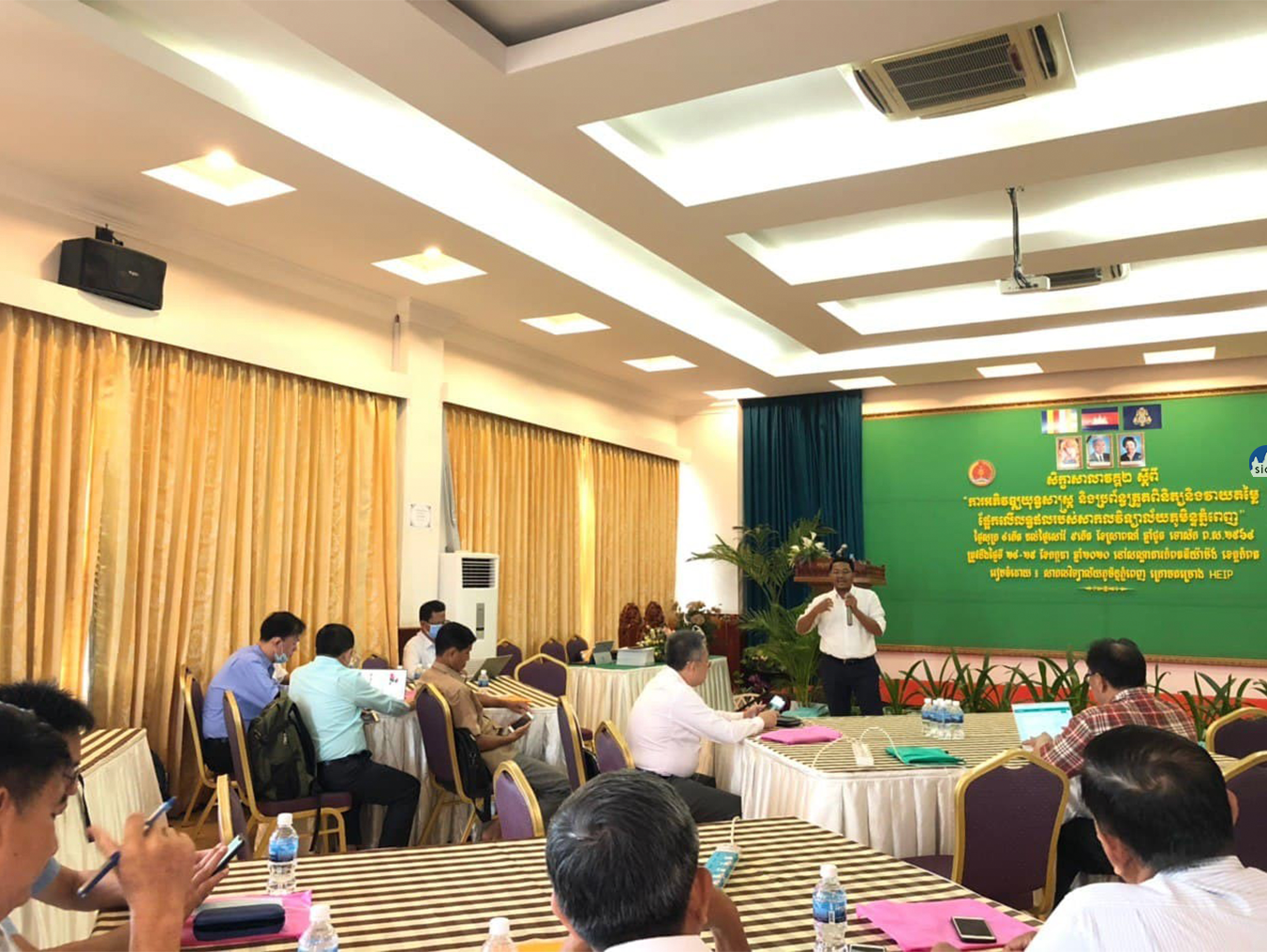
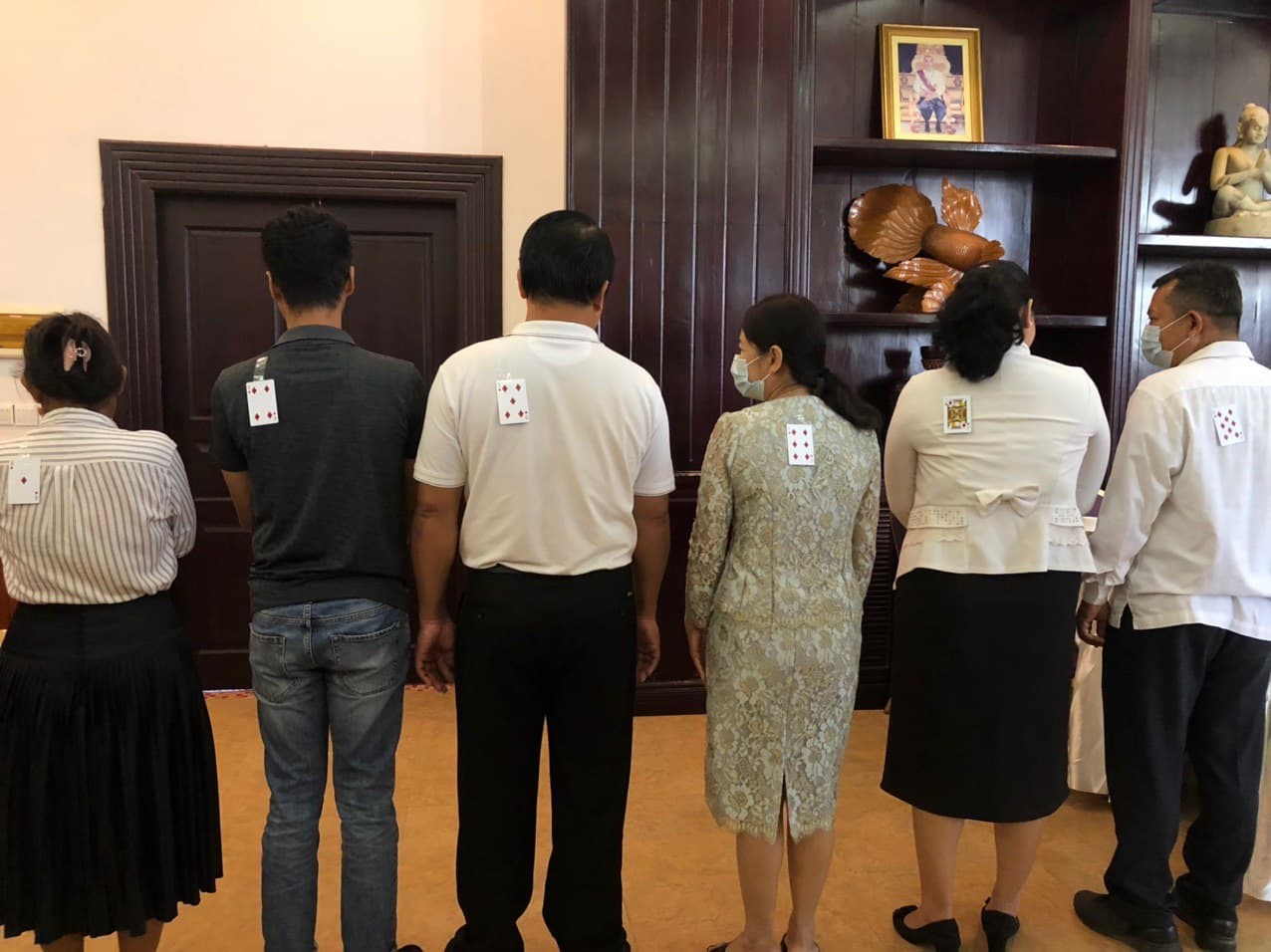
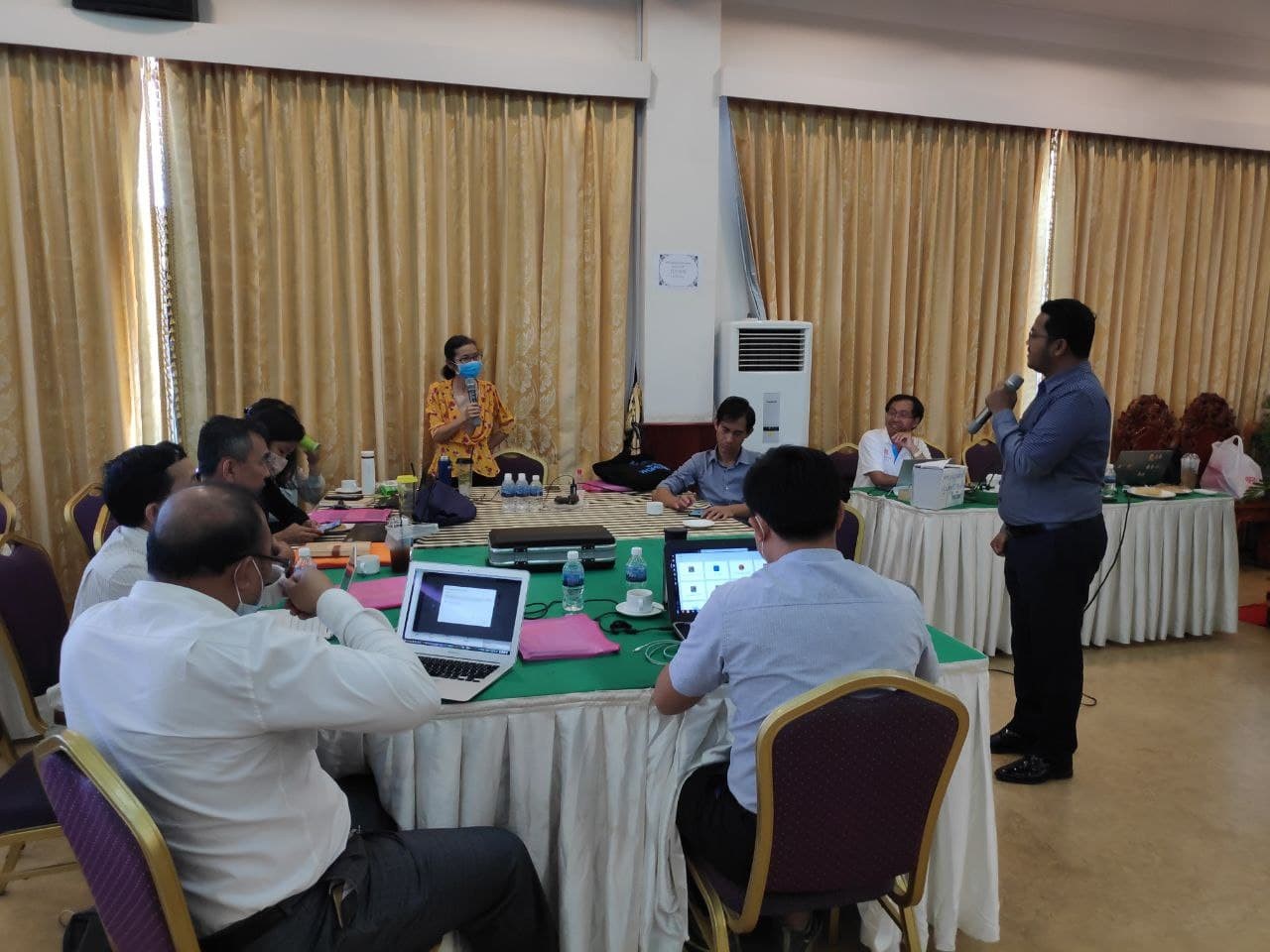
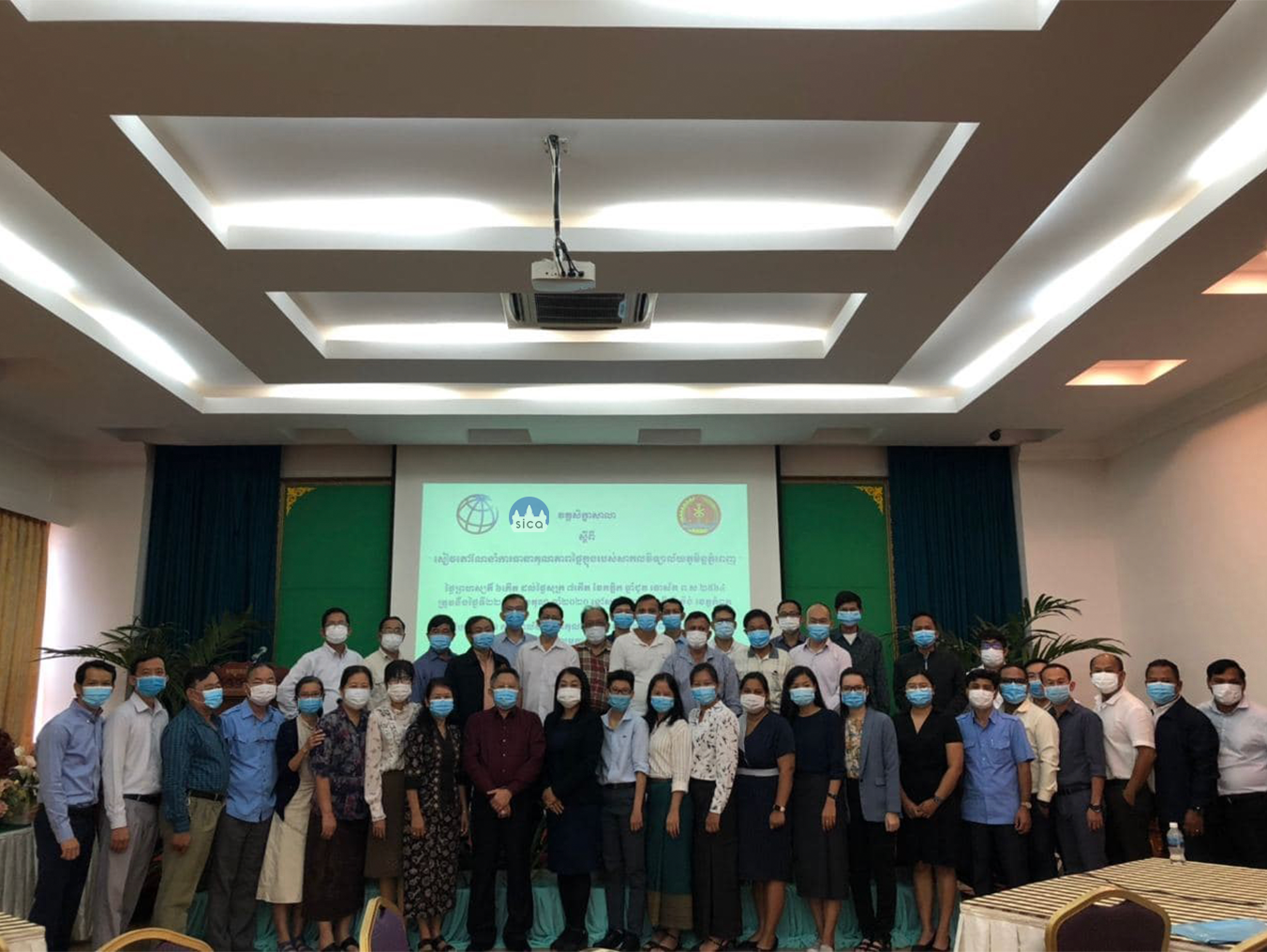
Consultation Workshop on 10-Year Strategy Development for the university
LBN Hotel Kampong Cham • 7–9 September 2020
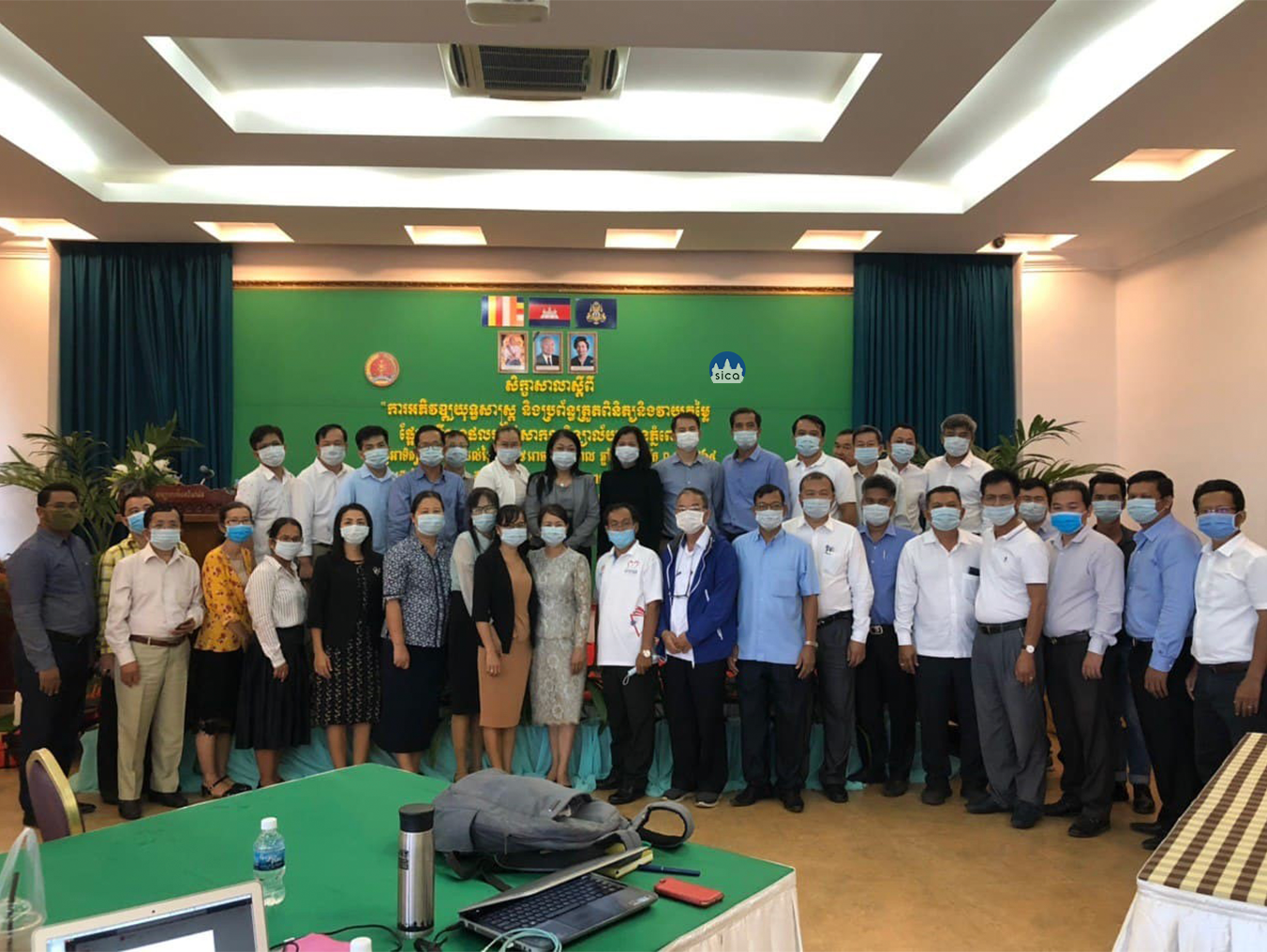
The Consultation Workshop on 10-year Strategy Development is to prepare the university roadmap for improving the quality of education in Higher Education Institutions (HEIs). It aims to prepare a realisable tool for monitoring and evaluation the implementation the strategy. In line with the vision in year 2030 of the Royal Government of Cambodia and HEIs, the university has to produce the qualified human capital to contribute to national economic growth. Therefore, this workshop requires the university stakeholders to revise their academic programs to meet the needs of job market.
The participants are provided the logframe template for statistics entry and they have to have to develop their strategies to achieve their goals and vision 2030. The inputs from participants are consolidated to form the 10-Year Strategy Development for RUPP.
Event Gallery
12
Consultation Workshop on the Development of a Guideline for IQA Manual
Mondial Hotel Kampot • 22–23 October 2020
The workshop is to prepare the university for institutional accreditation by the Accreditation Committee of Cambodia (ACC). This workshop involves with the majority of University stakeholder including the IQA-Network and the Deans, Vice-Deans of five faculties. They are grouped according to their roles and responsibilities to assess on the institutional SAR. The groups of participants have to identify the strength and areas for improvement. In group work, participants have to score all indicators of SAR and present them to the audience. The Quality Assurance Office (QAO) has to consolidate all information produced by the workshop and write final report for publishing.
23 October 2020
- 1. In the morning, Mr. Chorvy VONG presents the needs of IQA guideline for internal quality management.
- 2. The IQA Network people provide the challenges of carrying out their tasks.
- 3. In the afternoon, the participants discuss and define the roles and responsibilities of each committee.
24 October 2020
- 1. Each group discussion presents the outcomes of the work.
- 2. QAO suggests the composition of the committee and the work flow.
- 3. The Workshop Organizer Team wraps up the activities and consolidate the preliminary inputs.
- 4. To follow up, the QAO has to final IQA Manual and submits to Rector for approval before putting into practice.
Event Gallery
Documents
Our Team

Asst. Prof. Vong Chorvy
QA Executive Director
Asst. Prof. Chorvy Vong is a senior academic leader at the Royal University of Phnom Penh (RUPP), Cambodia, with extensive experience in academic leadership, institutional development, Outcome-Based Education (OBE), curriculum development, strategic planning, and internationalization. He holds an MA in TESOL from the University of Technology Sydney (UTS), Australia. He joined RUPP as a Lecturer of English in 1998 and has served as Director of the Quality Assurance Center since 2008 and Director of the International Relations Office from 2016. He has contributed to four distinct RUPP Strategic Plans (2008–2013, 2014–2018, 2019–2023, 2021–2030 and 2026–2030) and key institutional policies and frameworks, including the Quality Assurance Operational Policy, IQA Manual, RUPP Program Assessment Guideline (RUPP-PAG), and RUPP OBE Manual.
As an experienced OBE Trainer, Asst. Prof. Vong has led professional development for university leaders and academic staff in PLO/CLO development, curriculum mapping, learning outcomes assessment, program assessment, teaching and learning strategies, and continuous improvement. He was trained as an AUN-QA Assessor in 2017 and undertook professional development in Curriculum Design at Charles Darwin University, Australia and RELC Singapore in 1999. He has participated in major ASEAN initiatives, including ASEAN-QA and DIES TrainIQA, and served as a Specialist in Human Development at NTC in Japan (2005–2008). He is also an Assessor for the Accreditation Committee of Cambodia (ACC), MoEYS, contributing to higher education evaluation and accreditation. His expertise centers on academic leadership, OBE, curriculum development, program assessment, institutional development, and internationalization. Recently, Asst. Prof. Chorvy Vong has been involved with quality assurance research and a guest speaker for national seminars and conferences.

Mr. Nnoung Sovoan
QA Deputy Director Planning and M&E
Mr. Sovoan NHOUNG is Deputy Director of Quality Assurance Office at Royal University of Phnom Penh (RUPP). As the Deputy Director in charge of planning and monitoring, he monitors, evaluates, and assesses the effectiveness of RUPP departments in order to ensure that they are operating in accordance with good practices of academic standards. In addition, He assists with writing self-assessment report (SAR), prepares RUPP for institutional accreditation and does course evaluations and tracer studies. Besides, he is a lecturer of English at RUPP. He teaches English to students who wish to prepare for the entrance exam at Institute of Foreign Languages at RUPP. He obtained his Bachelor of Education in Teaching English as a Foreign Language at RUPP in 2006 and his M.A in Teaching English Language from De La Salle University in 2013.

Dr. Mok Sarom
Researcher & Tracer Study
Dr. Sarom is an academic researcher, a policy maker, an applied linguist, and an educator by training. He specializes in public policy, applied linguistics, education, language, literacy education, and leadership model development. He holds Ph.Ds. in Educational Administration, Applied Linguistics and International Development, respectively. In order to be a competent researcher, he advises younger researchers to envisage the research in the long term and understand the broad picture that demonstrates how their skills may encourage, support, and drive the growth of society and the nation. He is interested in supervising graduate projects in the areas of public policy, academic literacy, language-in-education policy, critical literacy education for out-off-school girls, leadership mode development. His work has been well-received by critics, many of whom have cited its impact on his fields. He is open to quantitative, qualitative, and mixed-methods approaches to investigating the complexity of public policy, education, leadership, language, literacy development. He supervised around 30+ Doctoral dissertations, 80+ Master’s theses, and published extensively articles on public policy, inclusive education, leadership, sociolinguistics, and international development.

Mr. Lay SokSamnang
International Standards
Mr. Lay Soksamnang is a Cambodian education professional and advocate for education reform, specializing in teacher education, school-based management, and quality assurance. He serves as the Internal Quality Assurance Coordinator and an Assessor at the Royal University of Phnom Penh and as a Country Representative in the ASEAN Quality Assurance Association.
He holds a Master of Education in Curriculum and Instruction, complemented by professional training in AUN-QA program assessment, self-assessment report writing and coaching, and internal quality assurance. His experience in teaching, training school principals, and higher education informs his approach to educational improvement.
His work encompasses curriculum development, outcome-based education, self-assessment reporting, assessment alignment, and stakeholder engagement. He also explores educational technology and the responsible application of artificial intelligence. Committed to continuous improvement, he seeks to strengthen educational quality, advance reform, and build educators’ and school leaders’ capacity to address educational priorities in Cambodia and the region.

Mr. Muon Vichhai
ITC Technician
Mr. Vichhia Moun is a dedicated ICT Technician at the Royal University of Phnom Penh (RUPP), where he plays a vital role in supporting the Quality Assurance Center (QAC). With strong technical skills in systems maintenance, network support, and digital tools, he ensures that the QAC’s operations run smoothly and efficiently. His responsibilities include assisting with ICT-enabled reporting systems, managing data platforms, and providing technical solutions that strengthen program evaluation and accreditation processes. Mr. Moun’s contributions have been essential in enhancing the QAC’s ability to monitor academic quality and align with national and regional standards. Known for his reliability and problem-solving approach, he supports staff in adopting digital workflows and ensures that technology remains a practical tool for quality assurance. Through his commitment, RUPP benefits from improved ICT services that foster transparency, accountability, and continuous improvement in higher education.

Ms. Loch Socheata
National &IQA Standards
Ms. Loch Socheata has been a lecturer in the Department of Physics at the Royal University of Phnom Penh (RUPP) since 2023, where she teaches Modern Physics, Electricity and Magnetism, Electronics, and Physics for Chemistry. She also serves as a Quality Assurance Assistant at RUPP, working in line with the Internal Quality Assurance (IQA) guidelines of the Department of General Higher Education (DGHE) and RUPP's own quality assurance system. She holds a Master of Engineering in Electrical and Information Engineering from Niigata University, Japan (2023), a Bachelor of Science in Physics from the Royal University of Phnom Penh (2020), and a Bachelor of Arts in English specialized in Professional Communication from the Institute of Foreign Languages (2021). With experience spanning both physics education and academic quality assurance, Ms. Socheata is dedicated to strengthening teaching quality and curriculum standards at RUPP.

Ms. Ek Sreyoun
General Administration Assistant
Ms. Sreyoun Ek is a RUPP Alumni and QA Administration Assistant in the QAC at the Royal University of Phnom Penh. She has been working in QAC since 2022 and ensures that products, services, and processes meet established quality standards. She is in charge of documenting and maintaining records of quality control activities, including graduate results, inspection reports, and corrective actions taken. She also assists in the investigation of customer complaints and recommends appropriate corrective actions. Furthermore, she helps develop and review of quality control documentations, such as standard operating procedures, preparation of quality reports and presentations for management reviews.
Contact Details 1
Address
The Royal University of Phnom Penh, Russian Federation Boulevard Toul Kork, Phnom Penh, Cambodia
Phone
Contact Details 2
Address
# Russian Bvld., Toul Kork, Phnom Penh